

What's Happening?
A Wisconsin appeals court has reinstated a 2011 anti-union law that had previously been struck down as unconstitutional. This law, known as Act 10, significantly limits collective bargaining rights for most public employees, allowing them to negotiate
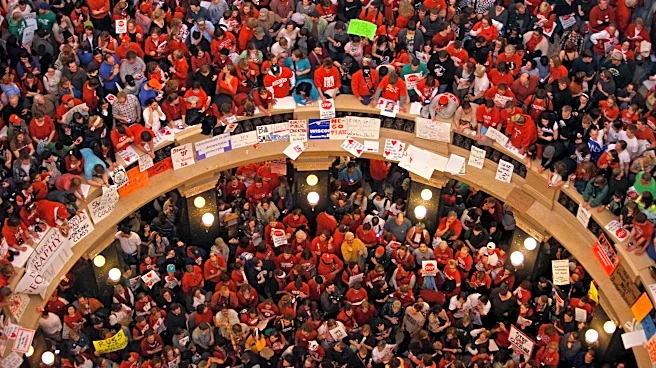
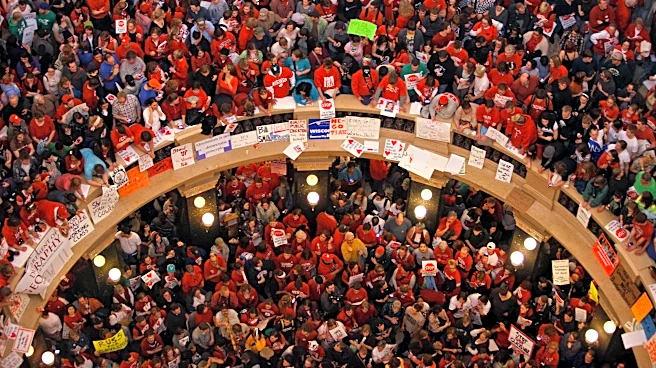
only for base wage increases that do not exceed inflation. The law also requires public workers to contribute more to their health insurance and retirement benefits. The recent court decision overturns a 2024 ruling that had temporarily invalidated the law, although the law's enforcement had been on hold pending appeal. The case is expected to be appealed to the Wisconsin Supreme Court, which is currently controlled by liberal justices. The law has been a point of contention since its enactment, sparking massive protests and a failed recall attempt against former Republican Governor Scott Walker, who championed the legislation.
Why It's Important?
The reinstatement of Act 10 is a significant setback for unions and public workers in Wisconsin, as it continues to restrict their ability to negotiate for better wages and working conditions. Supporters of the law argue that it provides necessary fiscal control to local governments and prevents financial strain on public budgets. However, opponents claim that it undermines the rights of public employees and has led to a decline in union membership and influence. The decision could have broader implications for labor rights and public sector employment across the state, potentially influencing similar legislative efforts in other states. The outcome of the expected appeal to the Wisconsin Supreme Court could further shape the future of collective bargaining rights in Wisconsin.
What's Next?
Unions are expected to appeal the decision to the Wisconsin Supreme Court, which could lead to a prolonged legal battle. The court's current liberal majority may influence the outcome, potentially overturning the appeals court's decision. Meanwhile, the political landscape in Wisconsin could shift, as all Democratic candidates for governor have pledged to repeal Act 10 if elected. The upcoming primary and general elections may play a crucial role in determining the law's future. Additionally, the ongoing legal and political debates surrounding Act 10 could impact public opinion and voter turnout in Wisconsin.