



What's Happening?
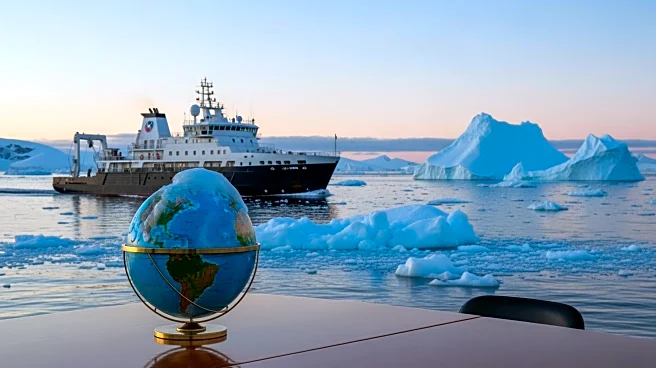
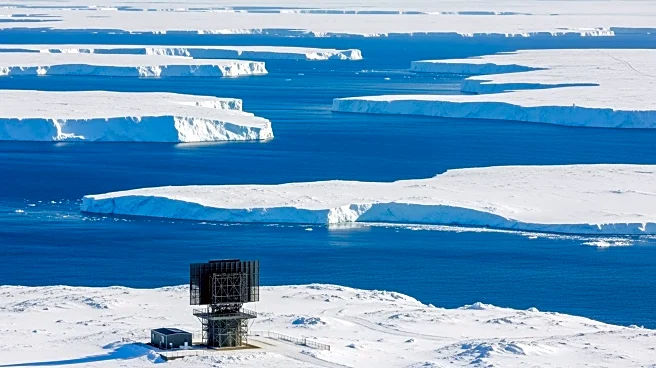
The United States has unveiled a new defense strategy that repositions its focus from Europe to Greenland, highlighting the Arctic as a critical area for homeland security. This strategic shift suggests that European allies will need to assume greater
responsibility for their regional defense. The strategy, which builds on the Trump administration's National Security Strategy, emphasizes the importance of securing key Arctic territories, including Greenland, to protect U.S. interests. The document argues that Europe is economically and militarily capable of self-defense, with non-U.S. NATO members having a significant economic advantage over Russia. The strategy also aligns with President Trump's recent rhetoric on Greenland, which has raised concerns among European nations about U.S. intentions in the Arctic.
Why It's Important?
This strategic shift underscores a significant realignment in U.S. defense priorities, potentially impacting transatlantic relations and NATO dynamics. By prioritizing the Arctic and Greenland, the U.S. aims to secure its northern flank against emerging threats, particularly from China and Russia. This move could lead to increased military and commercial activities in the Arctic, affecting geopolitical stability in the region. European allies may face pressure to enhance their defense capabilities and assume a more prominent role in regional security, which could strain resources and alter defense strategies. The emphasis on Greenland also reflects broader U.S. interests in securing strategic locations that are vital for global military and economic operations.
What's Next?
As the U.S. shifts its defense focus, European allies are likely to reassess their security strategies and defense spending to address regional threats independently. This could lead to increased military collaboration among European nations and a reevaluation of NATO's role in European security. The U.S. may also increase its military presence and infrastructure investments in Greenland and the Arctic, potentially leading to heightened tensions with Russia and China. Additionally, the strategic importance of the Arctic could prompt international discussions on governance and resource management in the region.