


What's Happening?
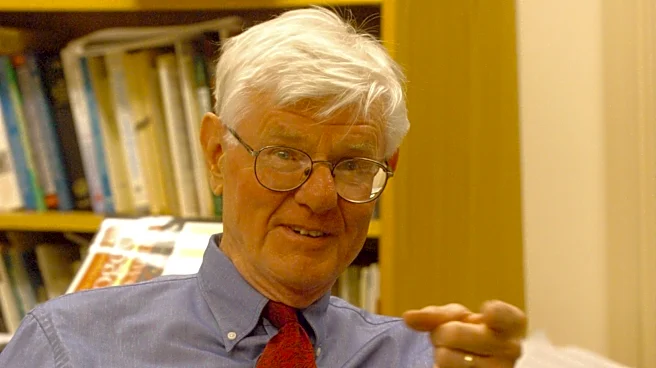
Gordon S. Wood, a distinguished historian known for his influential works on the American Revolution, has passed away at the age of 92. Wood died after being struck by a car in a supermarket parking lot in East Providence, Rhode Island. A professor emeritus
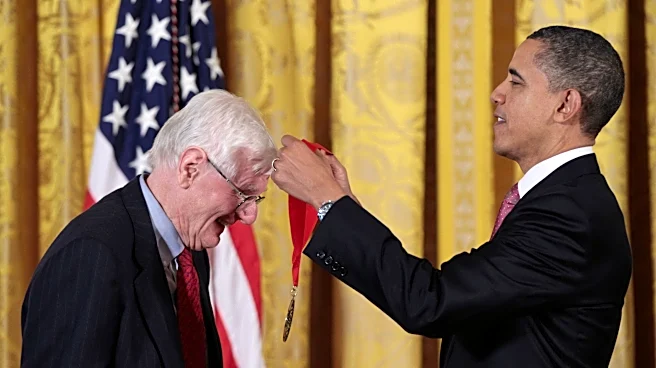
at Brown University, Wood authored numerous books and essays that have become essential references for understanding the early years of American independence. His notable works include 'The Creation of the American Republic' and 'The Radicalism of the American Revolution,' the latter of which won the Pulitzer Prize in 1993. Despite not achieving the mass popularity of some of his contemporaries, Wood's scholarship has been pivotal in shaping discussions about the formation of the United States. His work was recognized with a National Humanities Medal in 2011, awarded by President Barack Obama.
Why It's Important?
Gordon S. Wood's contributions to the field of American history have been profound, offering insights into the founding of the nation and the drafting of the U.S. Constitution. His scholarship has influenced generations of historians and students, providing a nuanced understanding of the American Revolution's impact on society. Wood's work challenged both conservative and liberal interpretations of the Revolution, arguing for its transformative effects on American society. His death marks the loss of a significant voice in historical scholarship, one that has shaped the way historians and the public understand the complexities of America's founding era. As the United States approaches its 250th anniversary, Wood's work remains relevant in ongoing debates about the nation's history and identity.
What's Next?
The passing of Gordon S. Wood may prompt renewed interest in his works and the themes he explored, particularly as the United States nears its 250th anniversary. Historians and educators may revisit his scholarship to engage with his interpretations and critiques, potentially leading to new discussions and analyses of the American Revolution. Additionally, Wood's death could inspire reflections on the current state of historical scholarship and the ways in which history is taught and understood in the United States. As debates about historical narratives continue, Wood's legacy may serve as a touchstone for discussions about the role of historians in shaping public understanding of the past.
Beyond the Headlines
Gordon S. Wood's career highlights the ongoing tensions within historical scholarship between traditional narratives and newer interpretations that emphasize the roles of marginalized groups. His critiques of projects like The New York Times' 1619 Project underscore the debates about how history should be framed and whose stories are told. Wood's emphasis on understanding history without moral judgment reflects a broader conversation about 'Presentism'—the tendency to interpret historical events through the lens of contemporary values. His work encourages a balanced approach to history, acknowledging both the achievements and the limitations of historical figures and events.