



What's Happening?
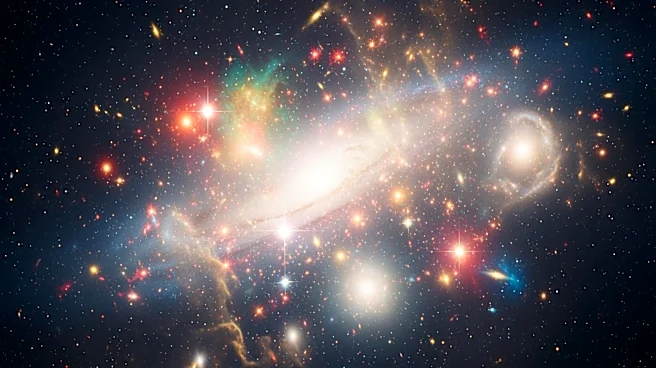
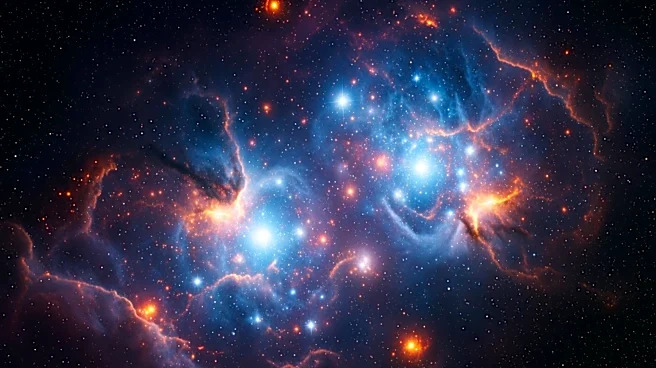
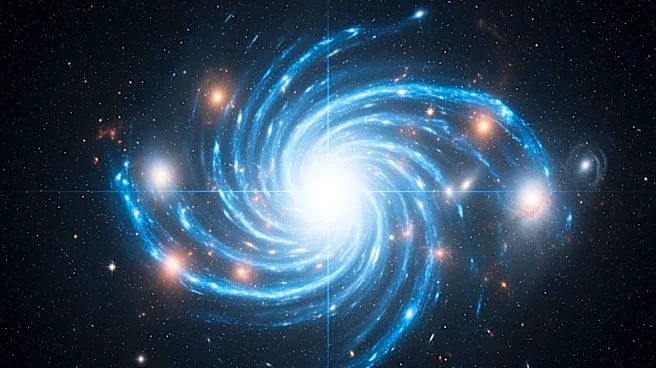
Researchers using the James Webb and Hubble space telescopes have discovered that stars in massive clusters form faster than those in smaller ones. The study focused on the Whirlpool galaxy (Messier 51) and three other galaxies, analyzing nearly 9,000
star clusters. It was found that stars in the most massive clusters take about 5 million years to form, compared to 7-8 million years in less massive clusters. This research provides insights into the star formation process and the role of gas and dust clouds in stellar nurseries.
Why It's Important?
Understanding the speed of star formation in different cluster sizes is crucial for astrophysics, as it influences theories about galaxy evolution and the lifecycle of stars. The findings can help refine models of star formation and improve predictions about the development of galaxies. This research also highlights the capabilities of the James Webb and Hubble telescopes in advancing our knowledge of the universe.