






What's Happening?
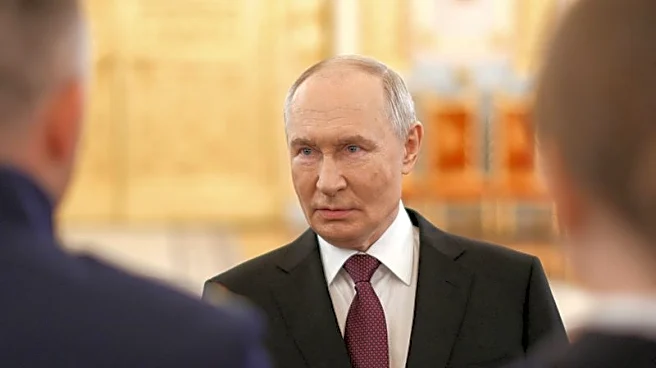
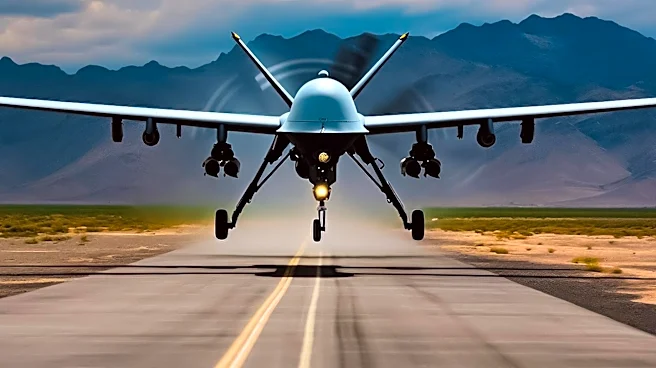
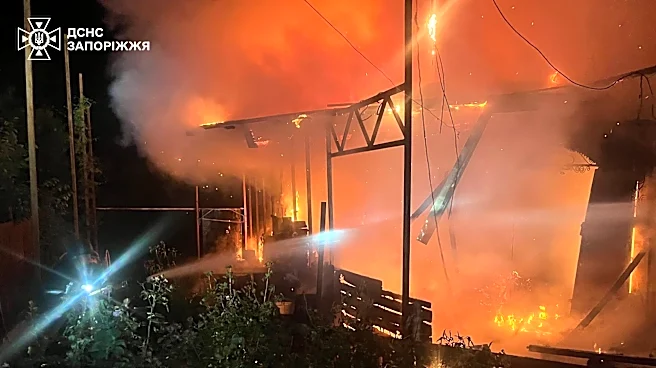
Ukraine has launched a series of drone strikes on Moscow, which NATO officials believe are threatening Russian President Vladimir Putin's hold on power. The attacks have overwhelmed Russian air defenses and forced the Kremlin to reallocate military resources
to protect the capital. This development comes amidst significant losses on the front lines and growing domestic discontent with the ongoing war. The strikes, which included a major assault on an oil refinery, are part of Ukraine's strategy to exhaust Russian forces and bring them to the negotiating table. Ukrainian Defense Minister Mykhailo Fedorov stated that these actions are intended to regain the initiative in the conflict. The situation is further complicated by Ukraine's ultimatum to Belarus, demanding the removal of equipment aiding Russian forces, with a threat of military action if not complied with.
Why It's Important?
The drone strikes on Moscow represent a significant escalation in the conflict, highlighting Ukraine's increasing military capabilities and strategic boldness. For Russia, the attacks pose a direct challenge to Putin's leadership, as they expose vulnerabilities in the country's defense systems and contribute to domestic unrest. The strikes also have broader geopolitical implications, as they may influence international perceptions of the conflict and affect the level of support Ukraine receives from Western allies. The situation underscores the potential for further destabilization in the region, with possible repercussions for global energy markets and international security dynamics.
What's Next?
As the deadline for Ukraine's ultimatum to Belarus approaches, the potential for further military escalation looms. If Belarus does not comply, Ukraine may carry out its threat to strike, which could widen the conflict and draw in additional regional actors. Meanwhile, NATO and Western allies are likely to continue monitoring the situation closely, potentially increasing military and economic support for Ukraine. The ongoing conflict may also prompt further international diplomatic efforts to de-escalate tensions and seek a resolution.