

What's Happening?
Northeast China's Jilin province recently hosted its 2026 Jilin Culture and Tourism Week in Moscow, Russia, from October 8 to 11. The event aimed to strengthen cultural ties and expand cooperation in tourism, ice and snow industries, and youth exchanges
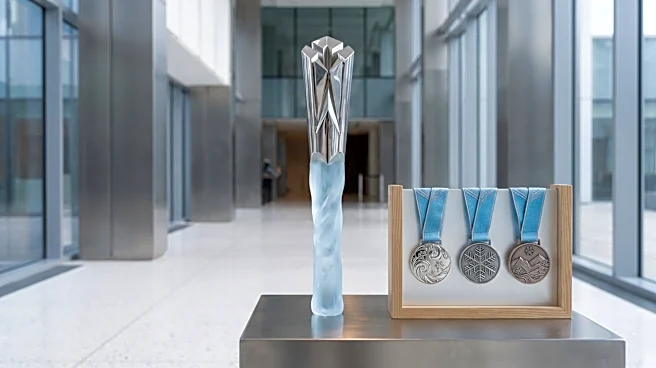
between Jilin and Russia. A key highlight was a special promotional event for the Changchun 2027 Winter Universiade, held on October 9, where the games' emblem, mascot, theme song, torch, medals, and licensed cultural and creative products were unveiled to Russian audiences. The Jilin delegation also engaged with the Russia-China Chamber of Commerce to explore opportunities related to the Winter Universiade, including ice and snow cultural industries and cross-border merchandise cooperation. Additionally, meetings were held with the Russia-China Friendship Association to establish a long-term exchange mechanism and encourage youth participation in winter sports, culture, and arts. A cultural performance featuring Jilin's ethnic orchestra and Jiju opera troupe, alongside Russian folk choirs and singers, took place at a Moscow shopping mall on October 10.
Why It's Important?
This cultural and tourism exchange initiative is significant for fostering soft power diplomacy and strengthening bilateral relations between China and Russia, particularly at the provincial level. By showcasing Jilin's cultural heritage and promoting the Changchun 2027 Winter Universiade, the event aims to attract Russian tourists and investors, thereby boosting Jilin's economy and international profile. The focus on ice and snow industries aligns with both regions' natural resources and potential for winter sports tourism, creating avenues for economic cooperation and shared development. Engaging with organizations like the Russia-China Chamber of Commerce and the Russia-China Friendship Association indicates a strategic effort to build institutional linkages and long-term partnerships. For Russia, hosting such events can diversify its cultural offerings and strengthen its ties with a major economic and political partner, potentially offsetting some of the impacts of international sanctions or diplomatic isolation from other regions. The emphasis on youth exchanges also suggests a long-term vision for cultivating mutual understanding and cooperation between future generations.
What's Next?
Following the Jilin Culture and Tourism Week, the established long-term exchange mechanisms with the Russia-China Friendship Association are expected to facilitate ongoing youth engagement in winter sports, culture, and arts. The promotional efforts for the Changchun 2027 Winter Universiade will likely continue, with a focus on attracting Russian participants and spectators. Further discussions and collaborations are anticipated between Jilin's ice and snow industries and Russian businesses, potentially leading to new commercial contracts and cross-border ventures in merchandise and tourism. The success of this event could also encourage other Chinese provinces to pursue similar cultural and economic diplomacy initiatives with Russia. The ongoing cultural performances and exchanges are likely to continue, fostering deeper people-to-people connections. The overall goal is to translate the goodwill generated during the Culture and Tourism Week into concrete partnerships and increased tourism flows between Jilin province and Russia.
Beyond the Headlines
The Jilin Culture and Tourism Week in Moscow represents a broader trend of deepening China-Russia cooperation, particularly in cultural and economic spheres, amidst evolving global geopolitical dynamics. While seemingly focused on tourism and culture, these events serve as crucial platforms for reinforcing strategic partnerships and projecting soft power. The emphasis on the Winter Universiade and ice and snow industries highlights a shared interest in developing niche markets and leveraging natural advantages, potentially creating a robust economic corridor in these sectors. Furthermore, the engagement with youth through cultural and sports exchanges is a strategic investment in future bilateral relations, aiming to cultivate a generation with positive perceptions and connections to both countries. This initiative subtly reinforces a narrative of mutual benefit and cooperation, contrasting with narratives of isolation or conflict. It also demonstrates how cultural diplomacy can be a powerful tool for maintaining and strengthening alliances, even in complex international environments, by building bridges at the societal level.