








What's Happening?
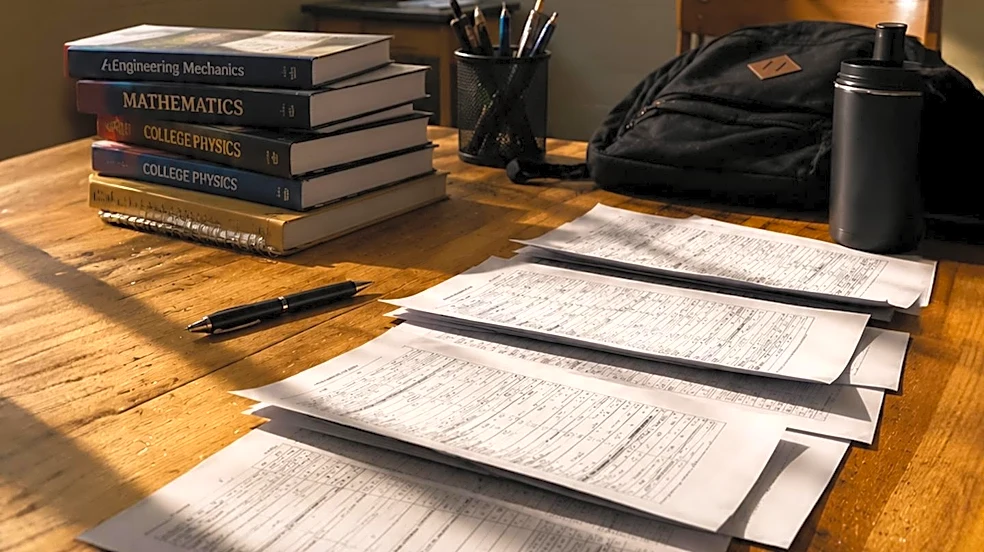
A new study, led by BK Byun, a Ph.D. candidate at the University of Michigan, indicates that prospective engineering students in the U.S. are significantly less likely to be admitted to college if they have not taken calculus in high school. This holds
true even when their high schools do not offer the course and they have excelled in the highest available math and science classes. The research, which involved 292 admissions officers evaluating fake application materials, found that applicants without calculus were recommended for admission 16.4 percent less often than those who had taken it. Furthermore, these applicants received ratings a half-point lower on a 10-point scale. The study highlights a potential bias in the admissions process, despite many engineering programs not formally requiring high school calculus for admission. This issue is particularly pertinent as calculus is only offered in about half of American high schools, with white and Asian students having greater access.
Why It's Important?
This finding is important because it exposes a disparity in U.S. higher education admissions that disproportionately affects students from schools with limited resources. The reliance on calculus as an implicit gatekeeper, even when not formally required, undermines the principle of holistic review, which aims to evaluate student achievement within their available opportunities. This practice can limit access to engineering fields for talented students who, through no fault of their own, attend high schools that do not offer advanced mathematics like calculus. Such a system can perpetuate educational inequality and hinder the diversification of STEM fields. While calculus is foundational for engineering, the study suggests that admissions officers may not adequately consider the context of an applicant's high school curriculum, potentially overlooking otherwise qualified candidates and narrowing the pipeline for future engineers.
What's Next?
The study, accepted by the journal Educational Researcher, is expected to fuel further discussions and potential re-evaluations of admissions practices in U.S. engineering programs. Institutions that claim to practice holistic review may face pressure to address these disparities by ensuring admissions officers more thoroughly evaluate student achievement in the context of their high school's offerings. Some colleges, like Caltech, have already begun accepting substitutions for calculus, indicating a potential shift in requirements. Future research may also explore if other subjects, such as physics, or other fields beyond engineering, exhibit similar biases in admissions decisions. The findings could prompt high schools to advocate for increased access to advanced math courses and encourage colleges to develop more equitable pathways for students from diverse educational backgrounds.
Beyond the Headlines
The implications of this study extend beyond mere admissions statistics, touching upon deeper issues of educational equity and access in the U.S. The implicit bias against applicants without calculus reflects a systemic challenge where the opportunities available to students are not always adequately considered in competitive selection processes. This can exacerbate existing socio-economic and racial disparities, as access to advanced courses often correlates with school funding and demographics. The debate also highlights a tension between the practical need for foundational knowledge in fields like engineering and the ideal of providing equitable opportunities for all students. Addressing this issue requires not only changes in admissions policies but also broader investments in high school curricula across the nation to ensure all students have access to the courses that can make them competitive for higher education and future careers.