






What's Happening?
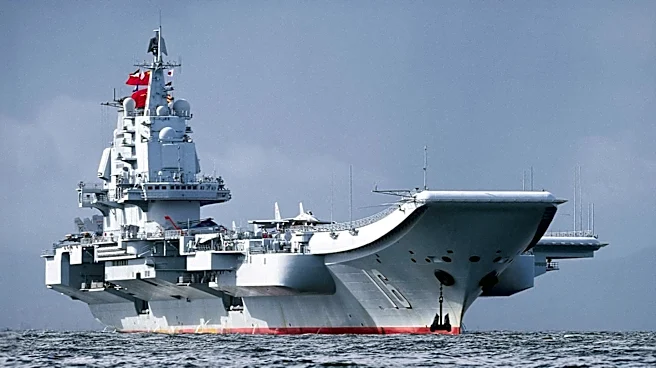
China's fourth aircraft carrier, widely believed to be its first nuclear-powered vessel, the Type 004, could be launched as early as next year, according to U.S. researchers. Satellite imagery from the Washington-based Centre for Strategic and International
Studies (CSIS) indicates that the warship is in a critical construction phase, comparable to China's third carrier, the Fujian, about a year before its launch in June 2022. A launch in 2027 would coincide with the centenary of the People’s Liberation Army on August 1, a date Beijing has historically used to showcase military advancements. While analysts suggest a 2027 launch is plausible, they caution that the Type 004's larger size and potentially more complex propulsion system, along with unforeseen issues, could alter the timeline. Beijing has not disclosed official construction timelines for the vessel. This development underscores China's ambition to project naval and air power far beyond its shores, expanding its military capabilities.
Why It's Important?
The potential launch of China's fourth aircraft carrier, especially if it is nuclear-powered, marks a significant milestone in its naval modernization and global power projection capabilities. A nuclear-powered carrier would offer extended range and endurance, allowing the Chinese navy to operate more effectively in distant waters, challenging the U.S.'s traditional naval dominance. This development could intensify geopolitical competition in the Indo-Pacific region and beyond, influencing strategic calculations for the U.S. and its allies. The U.S. has long monitored China's military expansion, and a more capable Chinese carrier fleet would necessitate adjustments in U.S. defense planning and alliances. It also signals China's commitment to becoming a leading maritime power, which could impact international shipping lanes, regional security, and the balance of power in critical areas like the South China Sea. The U.S. will likely view this as a continued challenge to its global military posture and a driver for further investment in its own naval capabilities.
What's Next?
Following the potential launch of the Type 004, the focus will shift to its sea trials and eventual commissioning, which could take several years. The U.S. and its allies will closely monitor these developments, analyzing the carrier's capabilities and operational deployments. This will likely lead to increased intelligence gathering and strategic assessments by the Pentagon and other defense agencies. The U.S. may also seek to strengthen its alliances and partnerships in the Indo-Pacific, potentially through joint naval exercises and increased military aid to regional partners, to counter China's growing naval presence. Furthermore, the development could spur further advancements in naval technology and defense spending globally, as other nations react to China's enhanced capabilities. The long-term implications include a potential shift in naval power dynamics and increased competition for influence in key maritime regions.
Beyond the Headlines
The construction of China's fourth aircraft carrier, particularly a nuclear-powered one, represents more than just a military upgrade; it symbolizes China's broader aspiration for global leadership and its challenge to the existing international order. This move reflects a strategic vision to project power and protect its growing economic interests worldwide, moving beyond a purely defensive posture. The psychological impact on regional neighbors and global powers is significant, as it signals China's increasing confidence and capability to assert its interests. Ethically, the expansion of such military assets raises questions about arms races and the potential for increased militarization of international waters. Culturally, it reinforces a narrative of national strength and technological prowess within China. For the U.S., it necessitates a re-evaluation of its long-term strategy in the Pacific, potentially leading to a more robust and integrated approach to regional security, involving both military deterrence and diplomatic engagement to manage rising tensions and prevent miscalculation.