









What's Happening?
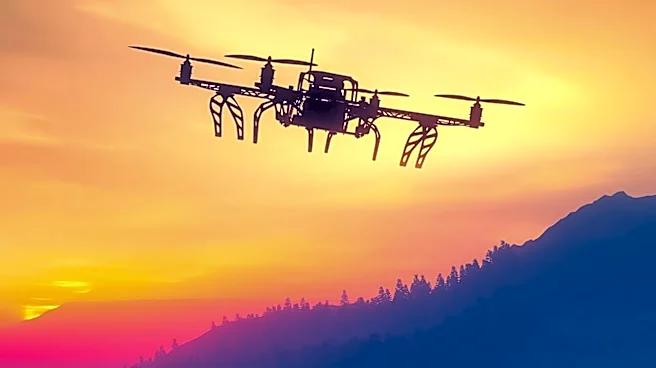
A secret facility in Germany has begun producing strike drones for Ukraine, as reported by The New York Times. The plant, owned by the German defense startup Helsing, specializes in developing autonomous systems powered by artificial intelligence. The exact
location of the facility remains undisclosed for security reasons, and the company’s name is not displayed on the building to prevent potential sabotage. The facility is capable of being dismantled and relocated within 24 hours if threatened. The HX-2 drones produced at this plant have been combat-tested in Ukraine, achieving a mission effectiveness rate of approximately 70%. These drones are designed to operate even when GPS and communications are jammed by electronic warfare systems. Since late 2024, Helsing has supplied thousands of these drones to Ukraine, continuously improving their software based on combat experience.
Why It's Important?
The establishment of this drone manufacturing plant in Germany signifies a significant development in European defense technology, catalyzed by the ongoing conflict between Russia and Ukraine. The production of advanced drones equipped with artificial intelligence highlights the increasing role of technology in modern warfare. For Ukraine, these drones provide a strategic advantage, enhancing their military capabilities against Russian forces. The involvement of a European startup like Helsing underscores the broader geopolitical implications, as European nations and companies become more actively involved in supporting Ukraine. This development also reflects the growing investment in autonomous weapons systems, which could reshape future military strategies and defense policies.
What's Next?
The ongoing production and deployment of HX-2 drones in Ukraine are likely to continue influencing the dynamics of the conflict. As these drones are further integrated into Ukraine's military operations, they may prompt a response from Russia, potentially escalating the technological arms race. European nations may also face increased pressure to balance their support for Ukraine with diplomatic efforts to de-escalate tensions. Additionally, the success of Helsing's drones could lead to further investments in autonomous military technologies, prompting other defense companies to innovate and expand their capabilities.
Beyond the Headlines
The use of autonomous drones in warfare raises ethical and legal questions about the role of artificial intelligence in combat. The ability of these drones to operate independently, even under electronic warfare conditions, challenges existing frameworks for accountability and decision-making in military operations. As these technologies become more prevalent, there may be calls for international regulations to govern their use, ensuring that they adhere to humanitarian principles and minimize civilian harm. The development of such technologies also highlights the need for robust cybersecurity measures to protect against potential hacking or misuse.