
What's Happening?
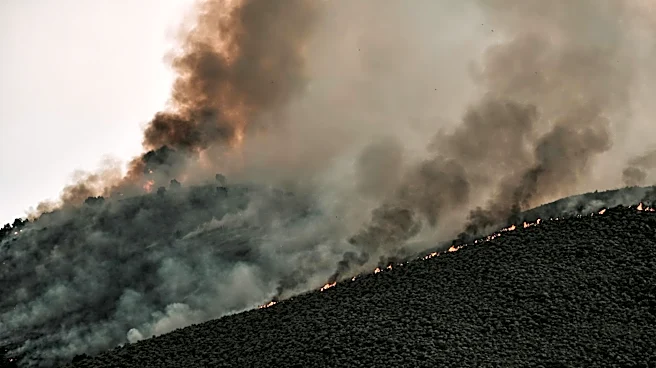
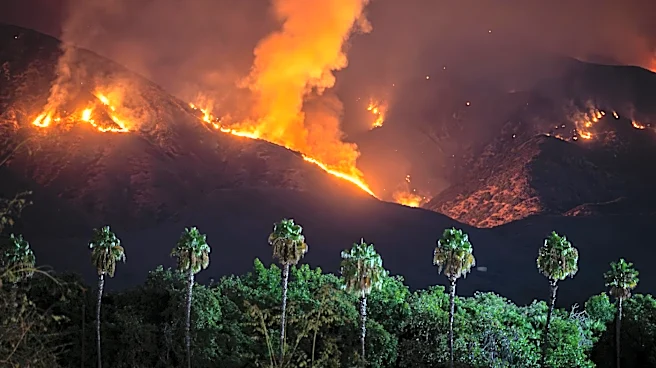
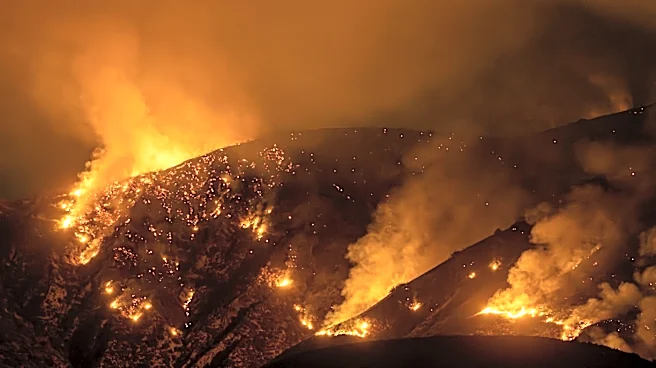
Air quality alerts have been issued in parts of California and North Carolina due to pollution levels that pose significant health risks. In Southern California, wildfires such as the Sandy, Bain, and Verona
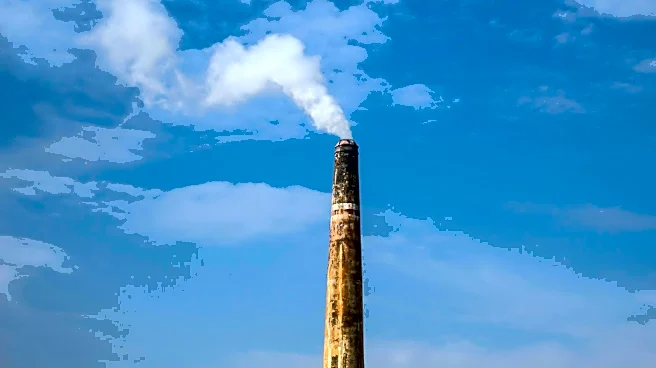
fires are producing thick smoke, leading to fine particle pollution (PM2.5) alerts in Los Angeles, Riverside, and San Bernardino counties. These alerts are expected to remain in place until Wednesday afternoon. The smoke contains microscopic particles that can penetrate deep into the lungs, potentially causing respiratory and cardiovascular issues. Meanwhile, in North Carolina, a Code Orange Air Quality Action Day has been declared in the Triad region, including Forsyth, Guilford, and Alamance counties, due to high levels of ground-level ozone. This form of pollution, primarily from vehicle and industrial emissions, is exacerbated by hot, stagnant weather conditions.
Why It's Important?
The air quality issues in California and North Carolina highlight the ongoing health risks associated with environmental pollution. In California, the wildfires not only threaten property and lives but also contribute to long-term health problems due to smoke inhalation. The PM2.5 particles can lead to serious health complications, particularly for vulnerable groups such as children, the elderly, and those with pre-existing health conditions. In North Carolina, the high ozone levels pose similar risks, affecting respiratory health and potentially leading to increased hospital visits. These situations underscore the need for effective environmental policies and emergency response strategies to protect public health.
What's Next?
Residents in affected areas are advised to stay indoors, use air purifiers, and avoid strenuous outdoor activities. In California, the situation will be closely monitored as the wildfires continue to burn, with potential evacuations and further health advisories likely. In North Carolina, authorities will track ozone levels and weather conditions to determine if additional alerts are necessary. Both states may see increased advocacy for stronger environmental regulations and emergency preparedness measures to mitigate future air quality issues.