






What's Happening?
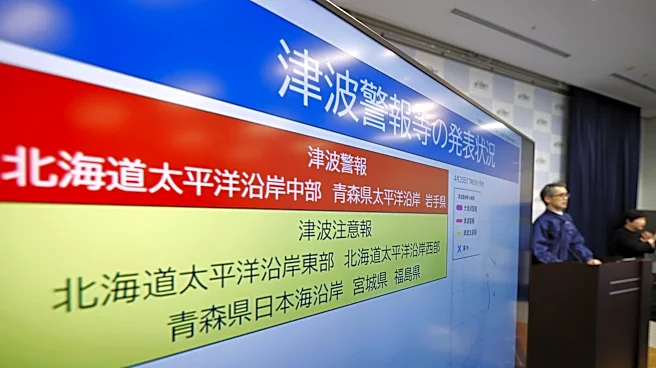
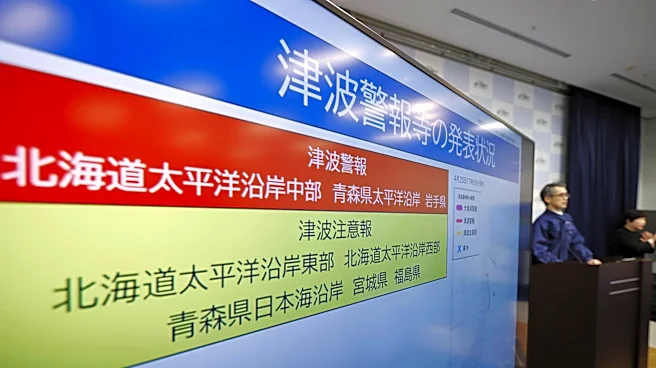
Japan has lifted a tsunami warning following a 7.7 magnitude earthquake that struck off its northern coast near Iwate prefecture. The quake was felt across a wide area, including Tokyo, and initially prompted authorities to issue a warning for waves up
to 3 meters high. Prime Minister Sanae Takaichi announced the formation of a crisis management team to assess the situation. Although tsunami waves reached heights of 80 cm, the warning was downgraded to an advisory. The Japan Meteorological Agency had urged immediate evacuation from coastal regions, emphasizing the potential for repeated tsunami waves.
Why It's Important?
Japan's vulnerability to seismic activity is underscored by its position on the Pacific 'Ring of Fire,' where tectonic plates frequently interact. The recent earthquake and tsunami advisory serve as a reminder of the country's ongoing risk of natural disasters. The 2011 earthquake and tsunami, which caused significant casualties and the Fukushima nuclear disaster, highlight the importance of preparedness and rapid response. The government's crisis management efforts aim to minimize the impact on affected communities and ensure public safety. The event also raises awareness of the potential for future seismic activity in the region.
What's Next?
The government continues to monitor the situation and assess the impact of the earthquake. Authorities have warned of an increased risk of a larger earthquake in the coming week, urging residents to remain vigilant and prepared. The crisis management team is working to confirm any casualties or property damage, and further advisories may be issued as more information becomes available. The focus remains on ensuring public safety and readiness for potential aftershocks or additional tsunami alerts.