





What's Happening?
A recent Vermont Public poll indicates that 57% of Vermonters support implementing a new yearly tax on second homes, with 28% disagreeing and 15% undecided. This issue has become a central point in Vermont's current election cycle, particularly for Democratic
gubernatorial nominee Amanda Janoo, who advocates for higher taxes on 'luxury second homes' and 'commercial vacation rentals.' Democratic Lieutenant Governor nominee Molly Gray also suggests such a tax could fund universal primary care. In contrast, Republican incumbents Governor Phil Scott and Lieutenant Governor John Rodgers express caution about new taxes, emphasizing the need to control education costs and expand the tax base to reduce property taxes for primary homeowners. Support for the tax is stronger among Democratic-leaning respondents (70%) compared to Republican-leaning (43%) and independent/minor party respondents (54%). The poll also found that sentiments on the tax are consistent across different regions of the state.
Why It's Important?
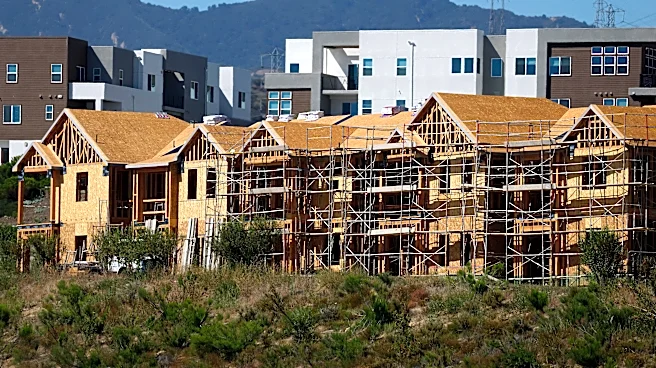
The strong public support for a second home tax reflects growing concerns over housing affordability and the availability of year-round housing in Vermont. With escalating rents and difficulties for residents like Katie Mandych to save for a first home, the proposed tax is seen by many as a mechanism to generate state revenue and encourage more properties to be used as primary residences. The debate highlights a tension between addressing the housing crisis and potential economic impacts, as some, like Alec Nadeau, worry that high taxes could deter wealthy individuals from investing in Vermont. The varying estimates of second homes in the state, ranging from 35,500 to 70,000, underscore the complexity of defining and implementing such a tax, which could affect a significant portion of the state's property owners and its overall economic landscape.
What's Next?
The discussion around a second home tax is expected to intensify as the Vermont election cycle progresses towards the November 3 general election. The stances of gubernatorial and lieutenant gubernatorial candidates will likely shape the legislative agenda post-election. If Democratic candidates advocating for the tax are elected, proposals for its implementation could be introduced, potentially leading to debates on defining 'second homes' and 'luxury' properties, as well as the tax rate and its revenue allocation. Conversely, if Republican incumbents maintain their positions, the focus might remain on alternative strategies for property tax relief and economic growth without new taxes. Regardless of the election outcome, the issue will likely continue to be a significant point of public and political discourse, influencing housing policy and state revenue discussions in Vermont.
Beyond the Headlines
The debate over taxing second homes in Vermont touches upon deeper societal and economic shifts, including the impact of tourism and remote work on local housing markets. The influx of second home ownership can drive up property values and rents, making it challenging for long-term residents and essential workers to afford housing. This creates a demographic and economic divide, where communities risk losing their year-round population and essential services. The ethical dimension of taxing those with multiple properties versus the potential for driving away investment is a delicate balance. Furthermore, the challenge of accurately identifying and categorizing second homes, as seen in the wide range of estimates, highlights the complexities of policy implementation and the need for robust data collection. This issue is not unique to Vermont, reflecting a broader national conversation about wealth distribution, housing equity, and the role of taxation in addressing social challenges.