

What's Happening?
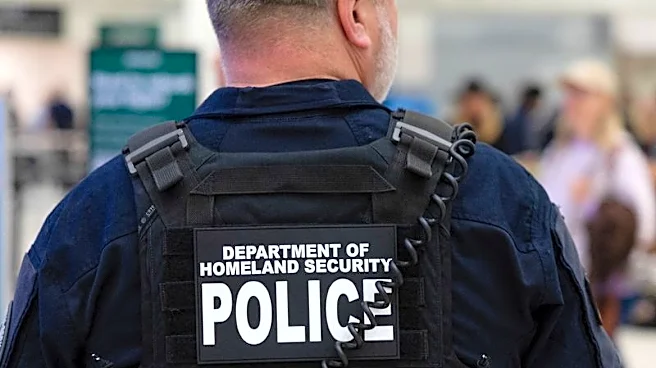
Despite a breakthrough in negotiations, the Department of Homeland Security (DHS) shutdown will persist as Congress is on a two-week recess. Senate Majority Leader John Thune sent a funding bill back to the House, which has not yet approved it. The bill,
supported by President Trump and House Speaker Mike Johnson, would fund DHS while separating Immigration and Customs Enforcement (ICE) and Border Patrol funding into a separate bill. The House Freedom Caucus has expressed concerns about the compromise, potentially delaying the shutdown's resolution. TSA workers are currently being paid after the White House rerouted funds to ease airport wait times.
Why It's Important?
The ongoing DHS shutdown, the longest in history, continues to impact federal workers and national security. The delay in resolving the shutdown highlights divisions within the Republican Party and the challenges of reaching a bipartisan agreement. The situation underscores the broader political struggle over immigration policy and federal budget priorities. The resolution of this shutdown is crucial for restoring normal operations at DHS and ensuring the security and efficiency of US airports. The outcome of these negotiations will have significant implications for DHS operations and the financial stability of its employees.
What's Next?
The House is not scheduled to fully reconvene until April 14, which may delay the resolution of the shutdown. The Senate's measure, if passed by the House, would fund most of DHS, with separate legislation needed for ICE and Border Patrol. The ongoing negotiations and political maneuvering will likely continue to be contentious, with potential impacts on upcoming midterm elections. The reconciliation bill, which may include additional funding for other priorities, is expected to be a significant legislative undertaking for Republicans.