





What's Happening?
The National Trust for Historic Preservation has formally requested the U.S. Supreme Court to suspend construction on President Trump's White House ballroom project. This appeal comes after the Trump administration sought the Supreme Court's intervention
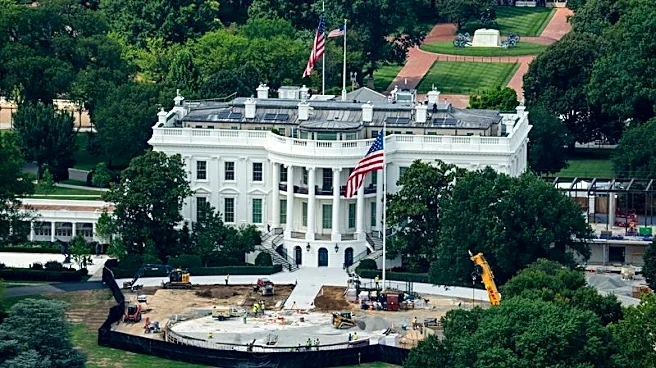
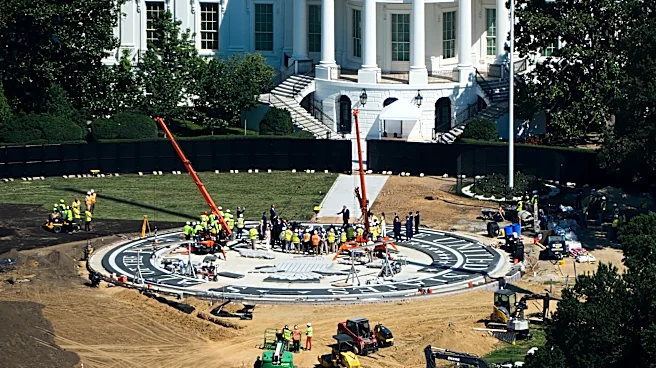
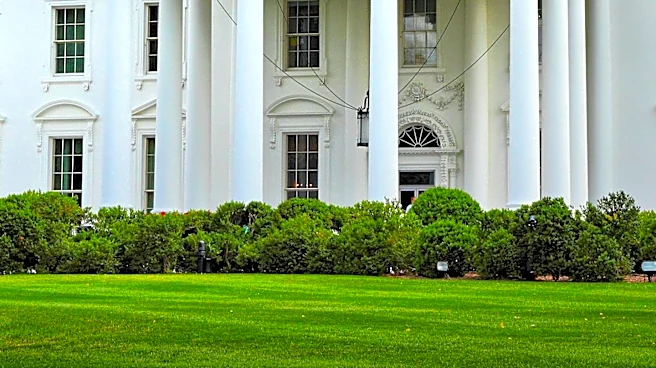
to allow construction to continue during the appeals process. The preservation group accuses the administration of attempting to bypass judicial review and failing to obtain congressional permission for the work, which they argue is required by federal law. The project involves the demolition of the East Wing of the White House to make way for a 90,000-square-foot ballroom and an underground military facility. A divided appeals court panel previously upheld an order to pause aboveground construction, a ruling that was temporarily suspended to allow for the administration's appeal.
Why It's Important?
This legal battle highlights a significant constitutional and historical preservation conflict. The core issue revolves around the extent of presidential authority to renovate the White House versus the role of Congress and federal law in overseeing such projects, particularly those impacting historic structures. The administration asserts the president's unimpeded authority over White House renovations, citing national security concerns related to the integrated military complex. Conversely, the National Trust for Historic Preservation argues that no statute grants the president the authority to destroy a portion of the White House for a privately funded ballroom without congressional approval. The outcome could set a precedent for future presidential renovations of historic federal properties and redefine the balance of power between the executive branch and legislative oversight regarding national heritage sites.
What's Next?
The Supreme Court, specifically Chief Justice John Roberts, has set a deadline for the National Trust for Historic Preservation to respond in writing to the administration's petition. Solicitor General D. John Sauer, representing the administration, has urged the Supreme Court to rule on its stay petition before the appeals court panel's decision takes effect. The administration emphasizes the national security imperative of the integrated military complex and the ballroom. The preservation group maintains that the lower court's injunction is narrowly tailored, allowing for the underground military facility's construction while pausing aboveground work. The Supreme Court's decision will determine whether construction on the ballroom project is halted or allowed to proceed, potentially influencing the future of the White House East Wing and setting a legal precedent for presidential construction projects.
Beyond the Headlines
Beyond the immediate legal and construction dispute, this case touches upon deeper themes of historical preservation, executive power, and the interpretation of federal law concerning national landmarks. The White House, as a symbol of American democracy and history, holds immense cultural and architectural significance. The debate over its renovation raises questions about the appropriate balance between modernization, security needs, and the preservation of historical integrity. The administration's argument that the current state of the project, an open construction site, compromises White House protection, underscores the practical challenges of such large-scale undertakings. The legal challenge also highlights the role of non-governmental organizations like the National Trust for Historic Preservation in safeguarding national heritage against perceived overreaches of executive authority, potentially influencing public discourse on the stewardship of national treasures.