




What's Happening?
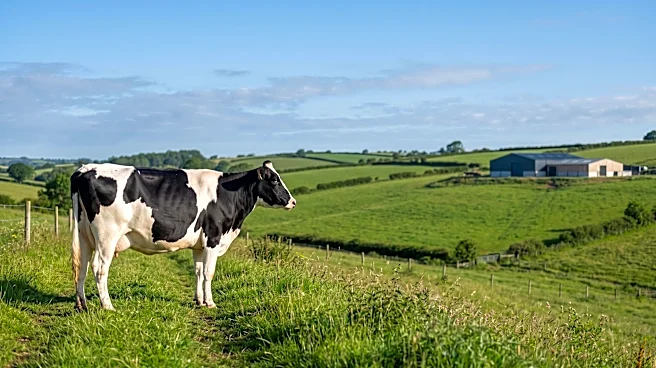
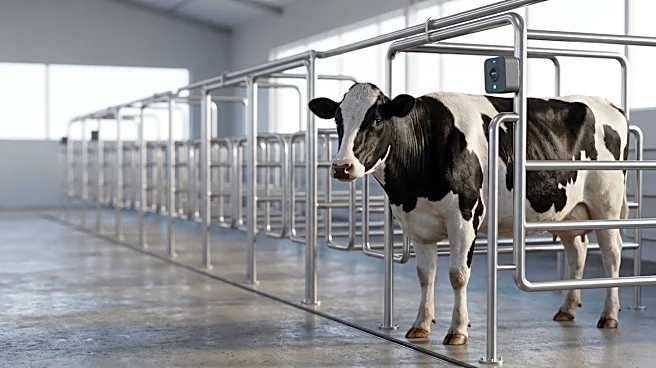
A new GitHub repository, 'ComfyUI-WanAnimalPreprocess,' has introduced AI-powered models designed for animal detection and pose estimation. These models utilize YOLOv8 ONNX for detecting various animal classes, including cows, and ViTPose models for 17-keypoint
animal pose estimation. The system is built as custom nodes for ComfyUI, adapting human pose estimation technology for animal use. Users can select between AP10k and APT36k datasets, with `yolov8m.onnx` or `yolov8l.onnx` recommended for optimal speed and accuracy in detection. The ViTPose models come in various sizes, offering different balances of speed and quality, from `vitpose-s-apt36k.onnx` for fastest processing to `vitpose-h-apt36k.onnx` for best quality. The system supports a range of animals beyond cows, such as cats, dogs, horses, sheep, elephants, bears, zebras, giraffes, and birds.
Why It's Important?
The development of AI-powered animal detection and pose estimation models holds significant implications for various U.S. industries, particularly agriculture, wildlife management, and veterinary science. In agriculture, these models could revolutionize livestock monitoring, enabling farmers to track the health, movement, and behavior of cattle with unprecedented precision. This could lead to early detection of illnesses, optimized breeding programs, and improved overall herd management, potentially increasing productivity and reducing losses. For wildlife conservation, the technology could assist in monitoring endangered species, tracking migration patterns, and preventing poaching by identifying animals in remote areas. In veterinary medicine, accurate pose estimation could aid in diagnosing lameness or other physical ailments in animals, providing objective data for treatment plans. The ability to process large volumes of visual data automatically reduces the need for manual observation, saving time and resources across these sectors.
What's Next?
The immediate next steps involve the broader adoption and integration of these AI models into existing agricultural and wildlife management systems. Researchers and developers are likely to continue refining the models, potentially expanding the range of detectable animals and improving the accuracy of pose estimation in diverse environments. Further development could also focus on creating user-friendly interfaces and mobile applications to make the technology more accessible to farmers, veterinarians, and conservationists. Additionally, the open-source nature of the GitHub repository suggests that a community of developers may contribute to enhancing the models, adding new features, and addressing specific use cases. The potential for real-time monitoring and data analysis will drive the next phase of implementation, leading to more proactive and data-driven decision-making in animal care and management.
Beyond the Headlines
Beyond the immediate applications, these AI models could trigger deeper shifts in how humans interact with and understand animal populations. Ethically, the enhanced ability to monitor animals raises questions about privacy for livestock and wildlife, and the potential for over-surveillance. Culturally, this technology could foster a more data-centric approach to animal welfare, moving beyond traditional observation methods to a more scientific understanding of animal behavior and health. The long-term implications include the potential for fully autonomous animal management systems, where AI not only monitors but also makes decisions regarding animal care, feeding, and movement. This could lead to increased efficiency but also necessitates careful consideration of the role of human oversight and intervention. The development also highlights the growing trend of AI being applied to biological systems, paving the way for similar advancements in other areas of biological research and environmental monitoring.