

What's Happening?
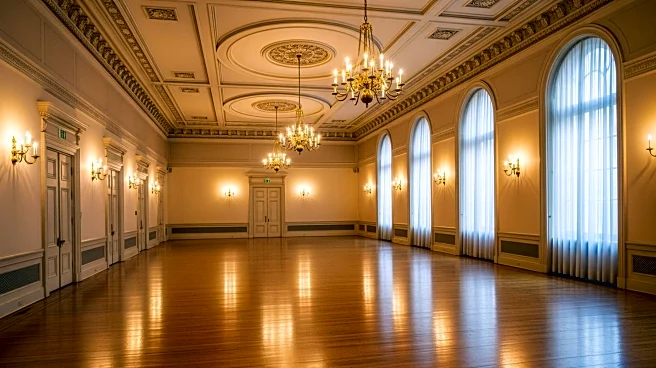
President Donald Trump provided an update on the ongoing renovations of the White House ballroom, stating that the project is 'under budget and ahead of schedule.' The ballroom, located in the East Wing, is now projected to cost $400 million, double the initial
estimate. The administration claims that the project is funded privately, with no taxpayer burden, although this has sparked scrutiny from lawmakers and preservationists. The ballroom is designed to accommodate 900 people, an increase from the original plan for 650. President Trump emphasized the security features of the ballroom, including bulletproof glass and a drone-free roof. The project has raised questions about the balance between modernization and the preservation of national landmarks.
Why It's Important?
The renovation of the White House ballroom is significant as it involves changes to a historic national landmark. The project's funding and transparency have been questioned, with concerns about the influence of private donations on public property. The expansion of the ballroom reflects broader debates about the extent of presidential authority in altering federally protected sites. The project also highlights the ongoing tension between tradition and modernization in the stewardship of national symbols. The scrutiny from lawmakers and the public underscores the importance of transparency and accountability in government projects.
What's Next?
As construction progresses, legal and public scrutiny over the White House ballroom project is expected to continue. Lawmakers, such as Representative Jamie Raskin, have expressed concerns about the project's impact on the historic character of the White House. The administration may face further challenges in addressing these concerns and ensuring that the project aligns with public expectations. The completion of the ballroom could also influence future discussions on the preservation and modernization of other national landmarks.