

What's Happening?
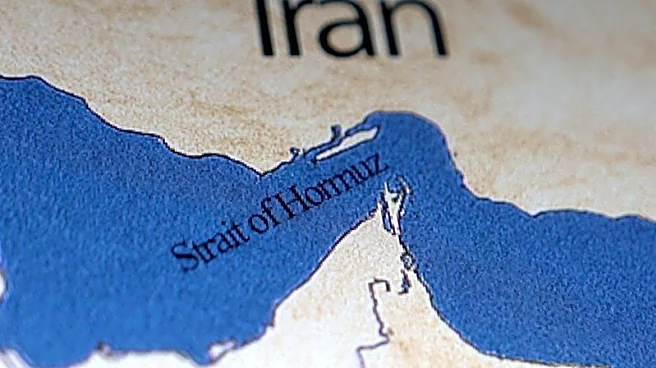
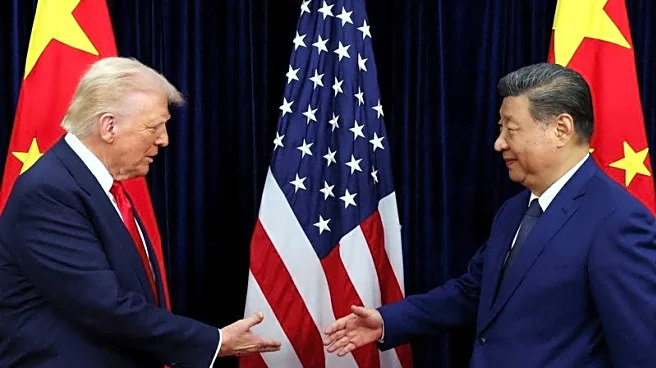
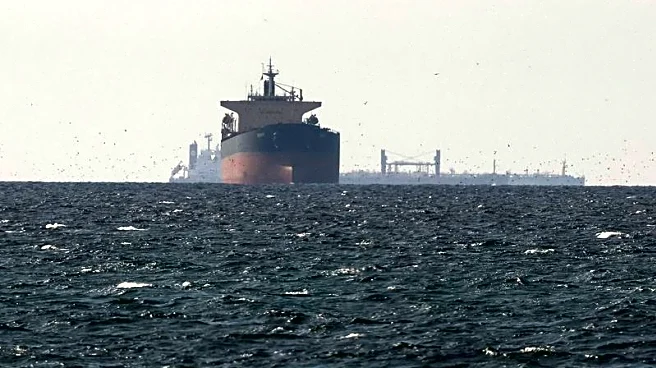
Japan is under increasing pressure from President Trump to assist in reopening the Strait of Hormuz amid tensions involving the U.S. and Iran. Prime Minister Sanae Takaichi is set to visit Washington for discussions with President Trump. In a recent parliamentary
session, Takaichi stated that Japan is not currently planning to deploy Self-Defense Forces ships to the Middle East, despite Trump's call for Japan and other nations to send warships to secure the strait. However, Takaichi indicated that her government is actively exploring other legal options to address the situation.
Why It's Important?
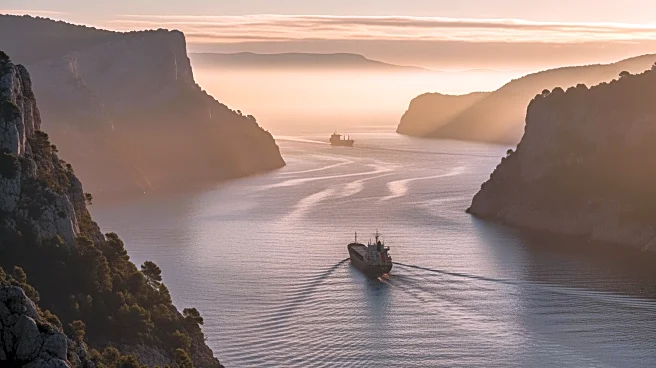
The Strait of Hormuz is a critical chokepoint for global oil shipments, and any disruption could have significant implications for international energy markets. Japan, as a major importer of Middle Eastern oil, has a vested interest in maintaining stability in the region. The pressure from President Trump highlights the strategic importance of Japan's role in international security and its alliance with the U.S. The outcome of Takaichi's discussions with Trump could influence Japan's foreign policy and defense strategy, as well as its relations with other regional powers.
What's Next?
Prime Minister Takaichi's upcoming visit to Washington will be crucial in determining Japan's next steps. The discussions with President Trump may lead to new agreements or commitments regarding Japan's involvement in securing the Strait of Hormuz. The Japanese government will need to balance its legal constraints with international expectations and its own national interests. The response from other stakeholders, including regional allies and domestic political figures, will also be important in shaping Japan's policy decisions.