




What's Happening?
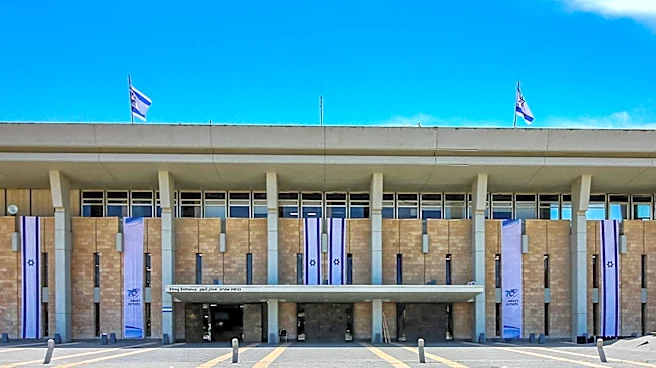
A joint statement from the leaders of the United Kingdom, France, Germany, Italy, the Netherlands, Canada, and Norway has strongly condemned Israel's decision to publish construction tenders for the E1 settlement project in the West Bank. These international
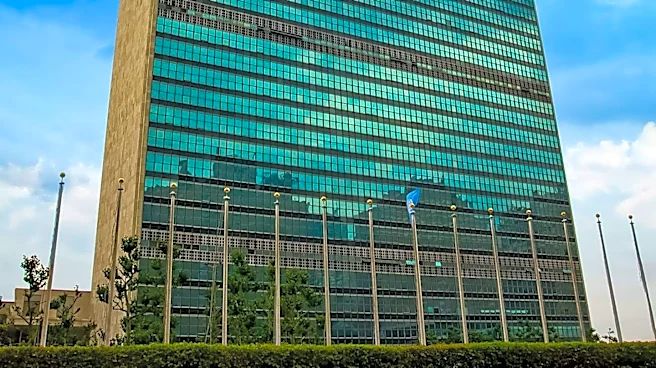
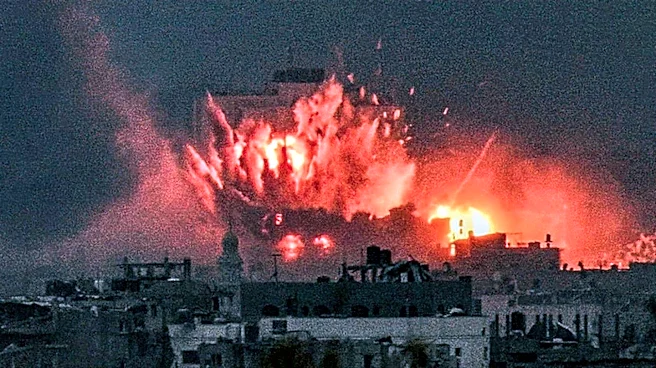
leaders assert that Israeli settlements in the West Bank are illegal under international law, a position reaffirmed by the United Nations Security Council. The statement highlights that this decision is particularly concerning given the current instability in the West Bank, marked by unprecedented levels of violence by settlers against civilians and severe restrictions on the Palestinian economy. The E1 settlement project is viewed as a significant threat to the two-state solution, as it would create a wedge through the West Bank and harm the territorial contiguity of the Palestinian Territories. The leaders have urged the Government of Israel to immediately retract these plans and cease its expansion of settlements in the West Bank, warning that such actions not only hinder peace efforts but also undermine Israel's international standing.
Why It's Important?
This joint condemnation from multiple international powers underscores a unified stance against Israeli settlement expansion, which is crucial for the U.S. in its role as a mediator in the Israeli-Palestinian conflict. The U.S. has historically supported a two-state solution, and the E1 settlement plan directly jeopardizes this objective. The statement's warning to businesses about the legal and reputational consequences of involvement in the project could deter U.S. companies from participating, potentially impacting economic ties and investment in the region. Furthermore, the emphasis on international law and the reaffirmation of the UN Security Council's position could influence future U.S. diplomatic efforts and its approach to resolutions concerning the conflict. The increased instability and violence in the West Bank, as noted in the statement, also pose a risk to regional security, which has broader implications for U.S. foreign policy and its allies in the Middle East.
What's Next?
The immediate next step involves observing Israel's response to this international pressure. The joint statement explicitly calls for the retraction of the E1 settlement plans, and the international community will likely monitor whether Israel complies. Should Israel proceed with the construction, it could lead to further diplomatic repercussions, potentially including stronger condemnations or even sanctions from individual nations or international bodies. Businesses considering involvement in the project will need to weigh the explicit warnings about legal and reputational risks, which could lead to a reluctance to bid on tenders. The U.S. government will likely face increased pressure to align its policies more closely with its international allies on this issue, potentially leading to shifts in its diplomatic strategy regarding Israeli settlements and the broader peace process. The ongoing instability in the West Bank also suggests a need for continued international engagement to de-escalate tensions and protect civilian populations.
Beyond the Headlines
The joint statement reflects a deeper concern among international leaders about the erosion of the two-state solution and the potential for prolonged conflict in the Middle East. The explicit mention of legal and reputational consequences for businesses highlights a growing trend of using economic and ethical pressure to influence geopolitical actions. This approach could set a precedent for how international bodies address other contentious territorial disputes globally. The reference to the UN Security Council's position on the illegality of settlements reinforces the importance of international law in guiding state conduct, even when faced with national security claims. For the U.S., this situation presents a complex challenge, balancing its strategic alliance with Israel against its commitment to international law and the pursuit of a peaceful resolution. The long-term implications could include a re-evaluation of U.S. aid and diplomatic support to parties involved, depending on their adherence to international norms and peace efforts.