

What's Happening?
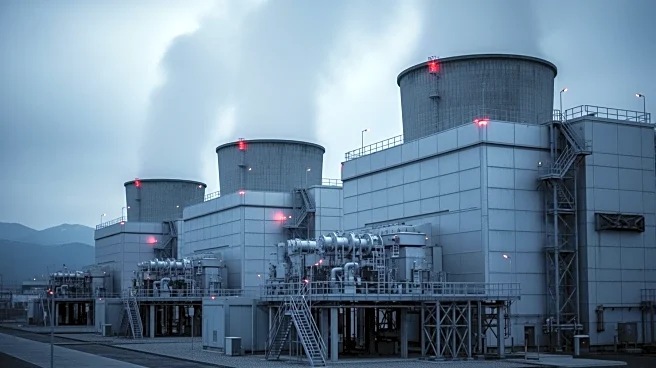
China is reportedly expanding and redesigning its nuclear weapons facilities, particularly in the Sichuan province, as revealed by satellite images. This development comes in the wake of the expiration of the New START treaty, the last remaining agreement
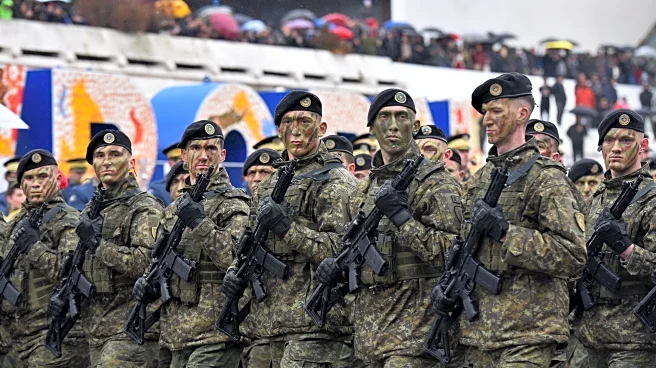
limiting long-range nuclear weapons between the U.S. and Russia. The New York Times reported that several Chinese nuclear sites have been refurbished or expanded over the past seven years. The Pentagon estimates that China's nuclear arsenal, currently around 600 warheads, could exceed 1,000 by 2030. This expansion is part of a broader military enhancement, including the growth of China's navy and the development of a nuclear-powered aircraft carrier.
Why It's Important?
The expansion of China's nuclear capabilities is significant as it occurs without any current international treaty constraints, raising fears of a new nuclear arms race. The lapse of the New START treaty leaves the global community without a framework to limit nuclear arsenals, particularly as China increases its stockpile. This development could potentially destabilize global security dynamics, prompting other nations to reconsider their nuclear strategies. The U.S. and Russia, which control the majority of the world's nuclear weapons, may face pressure to negotiate new arms control agreements that include China, which has so far resisted such measures.
What's Next?
The international community may push for new arms control negotiations that include China, aiming to establish a framework to limit nuclear proliferation. The U.S. may seek to engage China in discussions to prevent further escalation. Meanwhile, China's continued military advancements, including its nuclear program, will likely be closely monitored by global powers. The potential for a new arms race could lead to increased diplomatic efforts to address nuclear security and stability.
Beyond the Headlines
China's nuclear expansion highlights the challenges of maintaining global arms control in a multipolar world. The absence of a binding treaty raises ethical and security concerns about unchecked nuclear proliferation. Additionally, China's advancements in nuclear technology, such as the development of a laser fusion research center, suggest a shift towards more sophisticated and potentially destabilizing military capabilities. This situation underscores the need for renewed international dialogue on arms control and non-proliferation.