





What's Happening?
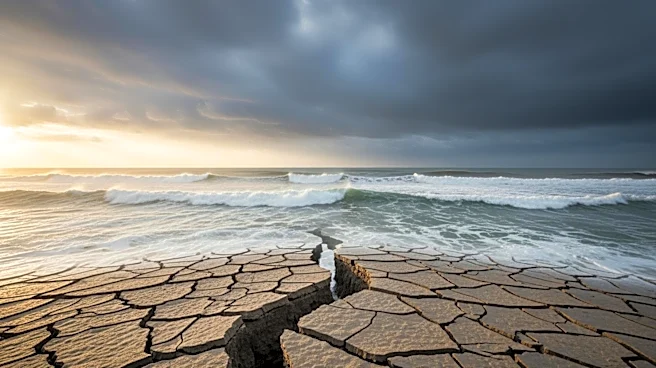
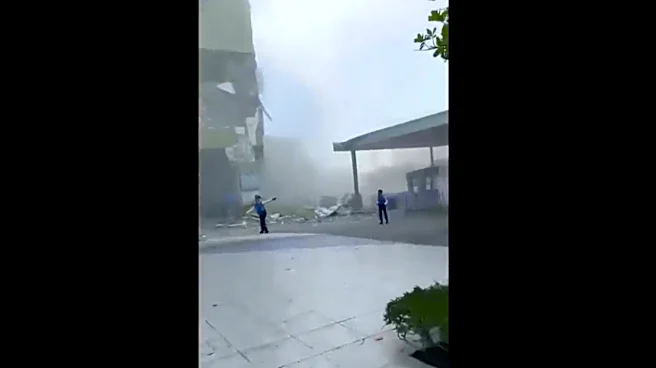
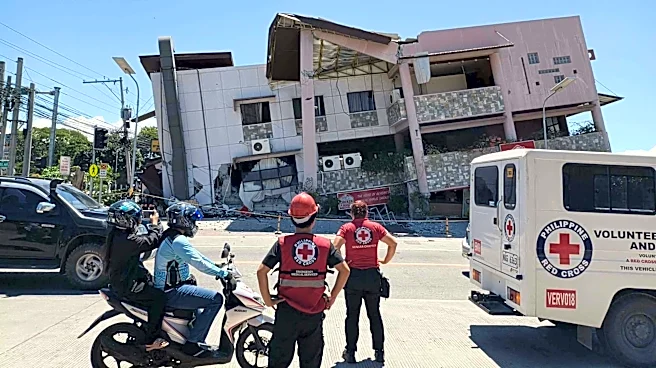
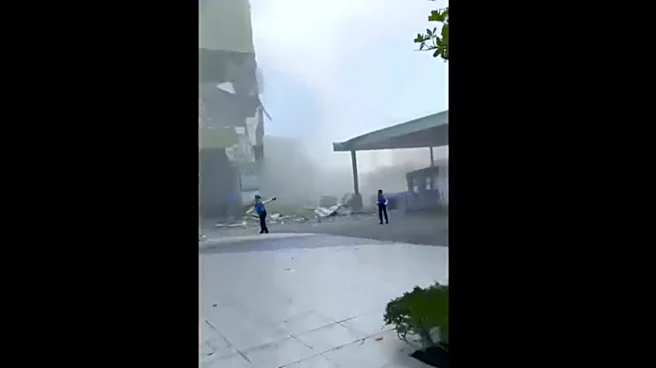
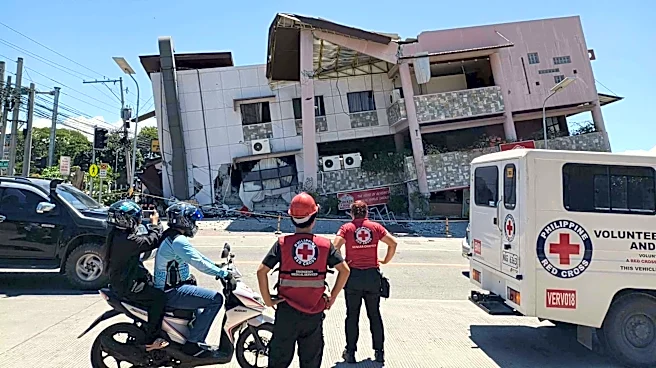
A magnitude 7.8 earthquake struck the southern Philippines, leading to tsunami warnings and causing significant structural damage. The quake, centered near General Santos City on Mindanao island, resulted in the collapse of buildings and at least one
reported fatality. The Philippine Institute of Volcanology and Seismology issued warnings for potential tsunami waves up to 3 meters high on some coasts. The earthquake also affected parts of Indonesia and Malaysia, with smaller tsunami waves possible. The Philippines, located on the Pacific 'Ring of Fire,' is prone to such seismic events. The earthquake occurred as public schools reopened, causing panic among students and necessitating emergency responses from the Philippine Red Cross.
Why It's Important?
This earthquake highlights the persistent threat of natural disasters in the Philippines, a country frequently impacted by seismic and volcanic activity. The immediate consequences include potential casualties, infrastructure damage, and disruption to daily life, particularly in education and public services. The event underscores the importance of disaster preparedness and the need for effective emergency response systems. The broader regional impact, including tsunami warnings in neighboring countries, illustrates the interconnected nature of seismic risks in the Pacific. The situation calls for coordinated international efforts to enhance resilience and support recovery in affected areas.
What's Next?
Following the earthquake, rescue and relief operations will be prioritized to assist affected communities. Authorities will conduct damage assessments and provide necessary aid to those displaced. The potential for aftershocks remains a concern, requiring ongoing vigilance. The event may lead to a reassessment of disaster preparedness strategies and infrastructure resilience in the region. International support and collaboration may be sought to aid recovery efforts and improve future disaster response capabilities.