
What's Happening?
Governor Gavin Newsom has signed two bills into law aimed at boosting clean energy through the development of nuclear energy sources in California. Senate Bill 925, authored by Senator Jerry McNerney,
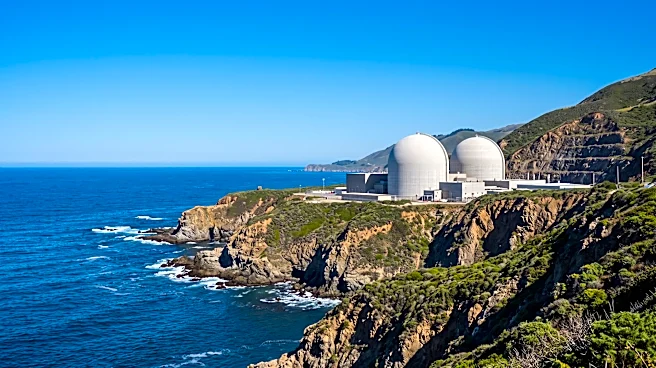
D-Pleasanton, mandates the state to create a plan for developing nuclear fusion energy facilities. This report, due by December 31, 2029, will outline strategies for expanding fusion research, commercialization, regulatory frameworks, permitting, licensing, and assessing fusion energy levels needed to meet California's long-term renewable energy and greenhouse gas emission goals. The California Energy Commission will oversee this report and will require additional staff, costing approximately $1.1 million for five new members and $500,000 for contract work, plus an annual $2 million for nine new staff members to form a permitting unit for fusion energy projects. Additionally, Assembly Bill 2647, introduced by Assemblymember Lisa Calderon, D-Whittier, directs the California Energy Commission to evaluate the role of nuclear energy in powering the state's critical infrastructure and to determine if new nuclear plants can meet increasing electricity demand, aligning with the state's goal of 100% zero-carbon electricity production by 2045. The Diablo Canyon Nuclear Power Plant, owned by PG&E, is currently the only operational nuclear facility in California, and PG&E has sought approval to extend its operations through 2030, with projected costs rising to $11.8 billion.
Why It's Important?
These legislative actions are significant for California's energy future, signaling a strategic shift towards advanced nuclear technologies, particularly fusion, to achieve ambitious clean energy targets. The state's commitment to developing nuclear fusion, a technology with potentially fewer drawbacks than traditional fission, could position California as a leader in this emerging field. This initiative aims to create jobs and foster economic growth by developing the necessary infrastructure and technology within the state. The extension of the Diablo Canyon Nuclear Power Plant's operations underscores the immediate need for reliable, carbon-free baseload power as the state transitions away from fossil fuels. However, the rising costs associated with extending Diablo Canyon's life, now projected at $11.8 billion, raise concerns about the financial burden on PG&E ratepayers. The focus on nuclear energy also highlights the challenges of balancing environmental goals with energy reliability and affordability, especially as the state faces increasing electricity demand and aims for 100% zero-carbon electricity by 2045.
What's Next?
The immediate next step involves the California Energy Commission formulating the plan for nuclear fusion energy development, with a detailed report due to the Legislature by December 31, 2029. This will include hiring new staff and establishing regulatory frameworks. Concurrently, the Commission will assess the role of existing and potential new nuclear energy plants, like Diablo Canyon, in meeting the state's energy demands and zero-carbon goals. PG&E's request to extend the Diablo Canyon plant's operations through 2030 will undergo state approval processes, which will likely involve public and regulatory scrutiny regarding its escalating costs and safety. The state will also continue to attract private investment in fusion and quantum research, aiming to create high-paying jobs. The success of these initiatives will depend on technological advancements in fusion, effective regulatory implementation, and the ability to manage the financial implications for ratepayers and taxpayers.
Beyond the Headlines
The push for nuclear energy, particularly fusion, in California represents a broader re-evaluation of energy strategies in the face of climate change and increasing energy demands. While traditional nuclear fission has faced public skepticism due to safety and waste concerns, fusion energy is being promoted as a cleaner, safer alternative, though its commercial viability remains decades away. This legislative move could set a precedent for other states considering advanced nuclear technologies as part of their clean energy portfolios. The significant investment in fusion research and development reflects a long-term vision for energy independence and environmental sustainability, but it also carries the risk of investing in technologies that are not yet mature. The debate over the Diablo Canyon plant's extension highlights the tension between maintaining existing reliable power sources and transitioning to newer, potentially more expensive, but cleaner alternatives. This complex energy landscape will require careful navigation of technological, economic, and public acceptance challenges.