



What's Happening?
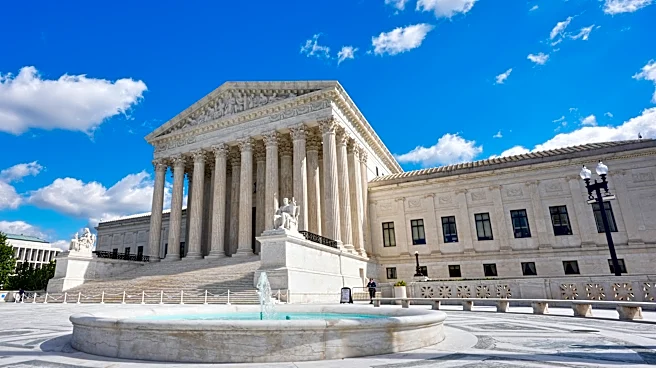
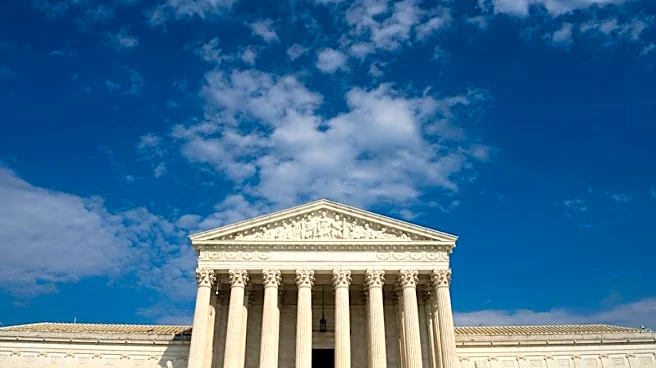
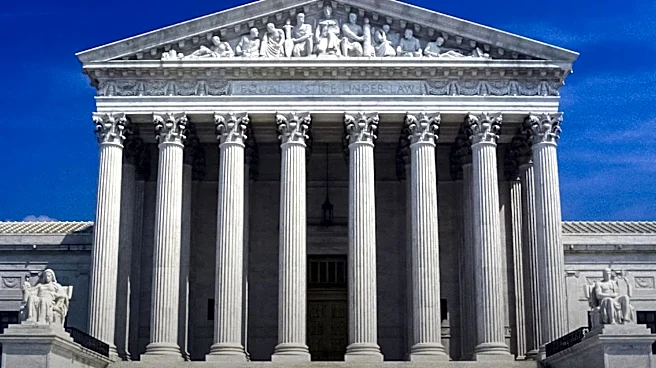
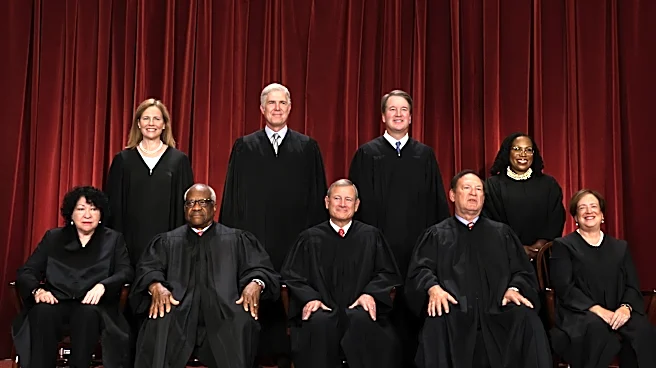
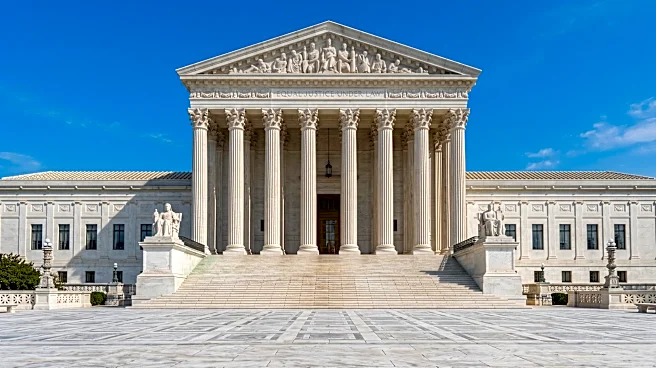
Four U.S. Supreme Court justices—Ketanji Brown Jackson, Amy Coney Barrett, Neil Gorsuch, and Sonia Sotomayor—recused themselves from the copyright case 'BMG Rights Management v. Vetter.' This mass recusal left only five justices eligible to participate,
falling short of the six-justice quorum required by federal law for the Court to hear a case. As a result, the lower court's judgment was affirmed by default without the Supreme Court resolving the legal questions on their merits. While the justices did not provide specific reasons for their recusals, it is speculated that their book-publishing arrangements with Penguin Random House, whose parent company is affiliated with BMG, may have presented a conflict of interest. The case involved songwriter Cyril Vetter's effort to reclaim worldwide rights to a 1960s hit song.
Why It's Important?
This incident highlights a significant institutional vulnerability within the Supreme Court: the potential for recusals to prevent the Court from fulfilling its primary function of resolving important legal disputes. The inability to hear 'BMG Rights Management v. Vetter' means that critical legal questions regarding copyright law, particularly the worldwide reach of reclaimed rights, remain unresolved at the highest judicial level. This situation can lead to legal uncertainty and inconsistent application of law across different jurisdictions. The recurrence of such quorum issues, as seen in a similar 2025 copyright dispute, underscores the need for mechanisms to ensure the Court can always perform its duties, especially when conflicts of interest arise among multiple justices. It raises questions about the Court's operational resilience and its capacity to address a full docket of cases.
What's Next?
The incident has reignited discussions about potential reforms to the Supreme Court's structure, particularly the implementation of term limits. One proposed solution involves justices serving 18-year active terms before transitioning to senior status. Under this model, senior justices would retain their office and protections but would no longer regularly hear Supreme Court cases. Instead, they could serve on lower federal courts and be available to fill in when active justices recuse themselves, thereby ensuring a quorum. This approach aims to strengthen the Court's capacity to function by providing a pool of experienced judges to prevent future quorum issues, allowing the Court to address all cases on its docket without being hampered by recusals. Such reforms could enhance the Court's efficiency and public confidence in its ability to deliver justice.
Beyond the Headlines
The mass recusal in 'BMG Rights Management v. Vetter' brings to light deeper ethical considerations regarding judicial impartiality and conflicts of interest. The lack of transparency surrounding the reasons for recusal can erode public trust in the judiciary. While justices are expected to recuse themselves when conflicts arise, the current system offers no ready substitute when multiple justices are affected, leading to a functional paralysis for specific cases. This situation prompts a broader examination of judicial ethics, financial disclosures, and the mechanisms for managing potential conflicts in a way that preserves both the integrity and the operational capacity of the Supreme Court. It also underscores the unique challenges faced by a small, powerful body like the Supreme Court, where the actions of a few individuals can have profound systemic consequences.