




What's Happening?
NASA is expressing gratitude to its citizen science volunteers for their significant contributions across various projects, ranging from space biology to Earth observation. These volunteers have been instrumental in data collection, analysis, code writing,
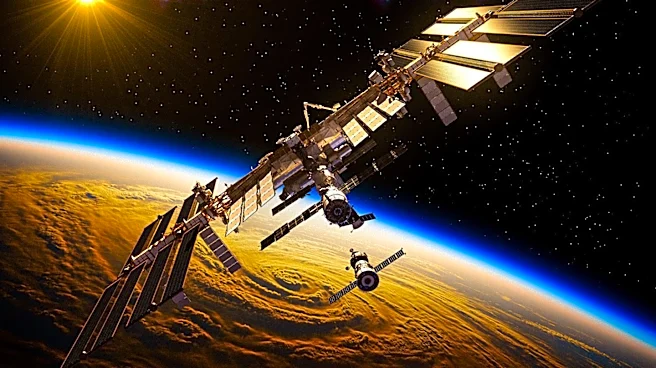
and even initiating their own scientific endeavors. For instance, high school students participating in the Open Science Data Repository Analysis Working Groups (OSDR AWGs) project utilized NASA's free Machine Learning for Space Biology course to analyze retinal data from the International Space Station (ISS) Rodent Research-9 Mission. Their work led to the publication of a scientific paper in npj Microgravity, identifying distinct molecular pathways of retinal damage in space-flown mice. Other projects benefiting from citizen scientists include Space Cloud Watch, Snapshot Wisconsin, Impact Flash!, and Chesapeake Water Watch, covering areas like noctilucent cloud observation, wildlife monitoring, lunar impact imaging, and water quality assessment.
Why It's Important?
The involvement of citizen scientists significantly expands NASA's research capabilities, allowing for the processing of vast amounts of data and the acceleration of scientific discovery that would otherwise be resource-intensive. This collaborative approach democratizes science, engaging the public and fostering a deeper understanding of space and Earth sciences. For students, participation offers invaluable hands-on experience, mentorship, and even co-authorship on scientific publications, providing a unique pathway into STEM fields. The diverse range of projects, from analyzing complex biological data to monitoring environmental changes, highlights the versatility and impact of citizen science in addressing critical scientific questions and contributing to real-world solutions.
What's Next?
NASA continues to encourage public participation in its scientific endeavors, with numerous open opportunities available through its citizen science portal. The success of these projects is likely to inspire the development of more citizen science initiatives, potentially expanding into new areas of research. The ongoing engagement of volunteers will continue to generate valuable data and insights, contributing to a broader understanding of space, Earth's climate, and biological processes. As technology advances, the tools and platforms for citizen science are expected to become even more accessible and sophisticated, further empowering individuals to contribute meaningfully to scientific research.
Beyond the Headlines
The success of NASA's citizen science programs illustrates a powerful model for public engagement in scientific research, demonstrating how collective effort can yield significant breakthroughs. This model can be replicated in other scientific disciplines, fostering a global community of amateur and professional researchers. Beyond the scientific output, these programs cultivate scientific literacy and critical thinking skills among participants, promoting a more informed and engaged citizenry. The recognition of high school students as co-authors on peer-reviewed papers challenges traditional academic structures and highlights the potential for talent to emerge from unexpected places, reinforcing the idea that scientific contribution is not limited by age or formal qualifications.