







What's Happening?
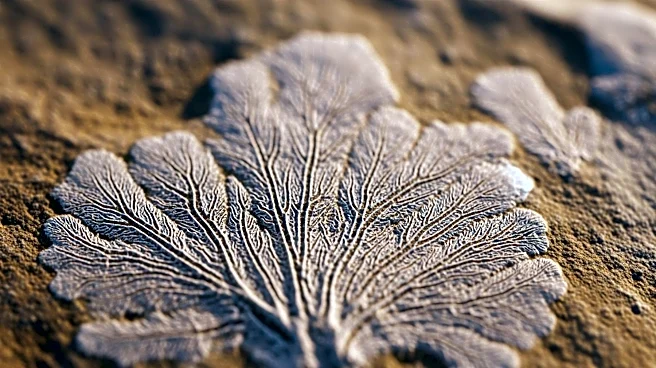
Recent fossil discoveries in the Xiannüdong Formation of southern Shaanxi Province, China, have solved a long-standing mystery about the origins of bryozoans, tiny colonial invertebrates. These fossils, dating back to the early Cambrian period approximately
520 million years ago, confirm that bryozoans were present during the Cambrian explosion, a time when most major animal groups first appeared. The fossils include new specimens of Protomelission gatehousei and a new taxon, Dayingomelission hexaclitia. The preservation of these fossils is exceptional, with internal soft tissues intact, providing definitive evidence of their bryozoan affinity. This discovery fills a significant gap in the fossil record and suggests that bryozoans were already diversifying during the Cambrian radiation.
Why It's Important?
The discovery of these fossils has profound implications for understanding the evolutionary history of bryozoans and the timeline of animal life on Earth. By placing bryozoans within the Cambrian explosion, the findings push the origin of this group further back in time, potentially to the Ediacaran period. This challenges previous theories and provides a clearer picture of the early diversification of life. The study also highlights the importance of advanced imaging techniques in paleontology, allowing researchers to uncover details about ancient life forms that were previously inaccessible. This research contributes to the broader understanding of the evolutionary processes that shaped the diversity of life on Earth.