






What's Happening?
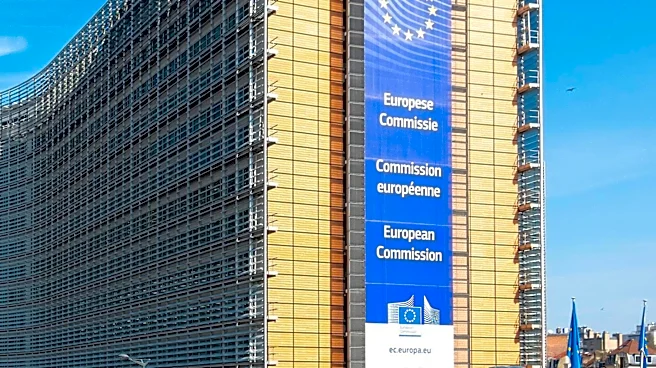
The European Union has committed an additional €25 million ($29 million) in funding to enhance migration cooperation with eastern Libya. This financial commitment, detailed in a letter from European Commission President Ursula von der Leyen to EU leaders,
aims to bolster border management, search-and-rescue operations, and anti-smuggling activities in the region. This move signifies a deepening engagement between the EU and the authorities in eastern Libya, which is controlled by military commander Khalifa Haftar. The EU's increased focus on eastern Libya comes as migrant departures from areas under Haftar's control have risen. While the EU formally recognizes only the Tripoli-based government, it has been increasing its contact with eastern Libyan authorities since last year. This initiative follows the EU's July announcement regarding the establishment of a Maritime Rescue Coordination Centre in Benghazi, further expanding cooperation in the eastern part of the country. Libya remains a primary departure point for irregular crossings into the EU, and the funding is intended to curb this trend.
Why It's Important?
This expansion of migration cooperation and funding by the EU is significant for several reasons. It underscores the EU's strategic priority to control irregular migration across the Mediterranean, a persistent challenge for the bloc. By engaging with eastern Libyan authorities, the EU is adapting its approach to the complex political landscape of Libya, where control is divided between rival administrations. This engagement could lead to more effective interdiction of migrant flows, potentially reducing the number of arrivals in Europe. However, it also raises questions about the EU's recognition and support of different factions within Libya, potentially impacting the country's internal political dynamics. The funding's focus on border management and anti-smuggling activities suggests a continued emphasis on security measures to address migration, rather than solely humanitarian approaches. The long-term impact on human rights and the treatment of migrants in Libya, a country known for its challenging conditions for migrants, will be a critical aspect to monitor.
What's Next?
The additional funding is expected to be deployed to support specific activities in eastern Libya, including enhancing the capabilities of border management and search-and-rescue units. The establishment of the Maritime Rescue Coordination Centre in Benghazi will likely proceed, further solidifying the EU's operational presence in the region. Future EU-Libya meetings are anticipated to continue discussions on migration cooperation, as indicated by President von der Leyen. The EU will also continue its support for voluntary returns of migrants from Libya to their countries of origin, in collaboration with the International Organization for Migration. The effectiveness of these measures in reducing irregular migration and their broader implications for stability and governance in Libya will be closely watched. The engagement with eastern Libyan authorities may also influence the ongoing political dialogue within Libya, potentially impacting efforts towards a unified government.
Beyond the Headlines
The EU's decision to expand migration cooperation with eastern Libya, despite formally recognizing the Tripoli-based government, highlights the pragmatic and often complex nature of international relations when dealing with fragmented states and pressing issues like migration. This approach could be seen as a de facto acknowledgment of the influence and control exerted by military commander Khalifa Haftar in eastern Libya. It raises ethical considerations regarding the potential legitimization of non-state actors and the implications for human rights, given past reports of abuses against migrants in Libya. The focus on curbing irregular migration, while understandable from a European perspective, may overshadow the root causes of migration and the humanitarian needs of those transiting through Libya. This strategy could also set a precedent for how international bodies engage with regions controlled by various factions in other conflict-affected countries, prioritizing immediate security concerns over broader political unification or human rights frameworks.