


What's Happening?
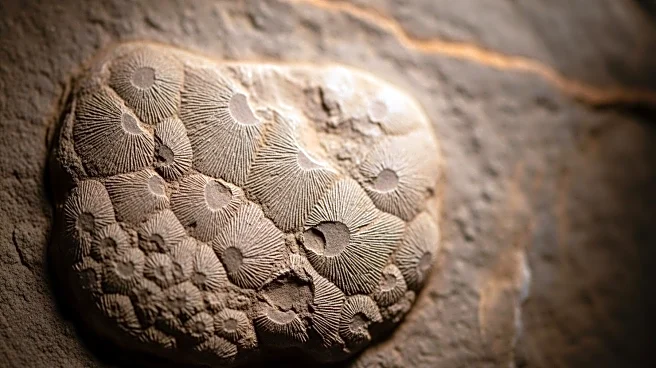
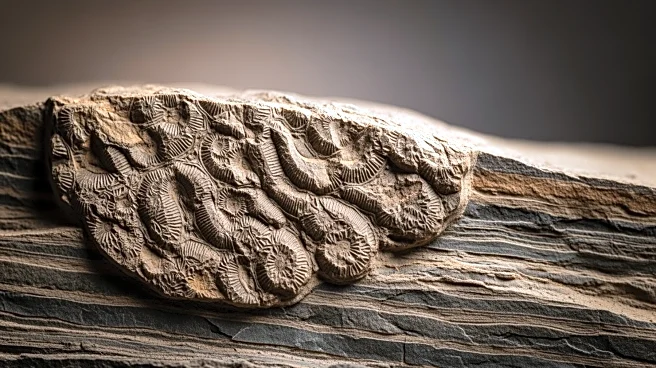
A new study has revealed that ancient embryo-like fossils from the Weng’an Biota in Southern China, previously thought to be early animal embryos, belong to a different class of multicellular organisms. This discovery, led by researchers from the University
of Bristol and the Chinese Academy of Sciences, suggests that the emergence of animal life occurred later than previously believed. Using synchrotron tomography, the team mapped the internal structure of the fossils, finding discrepancies in cell division patterns compared to known animal embryos. This challenges long-standing assumptions about the timeline of animal diversification.
Why It's Important?
The findings have significant implications for understanding the history of animal life on Earth. By refuting the idea that these fossils represent early multicellular animals, the study suggests that animal diversification occurred after the deposition of the Weng’an Biota. This could reshape scientific perspectives on the evolution of complex life forms and the timeline of animal emergence. The research highlights the importance of advanced imaging techniques in paleontology and opens new avenues for exploring the origins of life, potentially leading to a reevaluation of evolutionary theories.