
What's Happening?
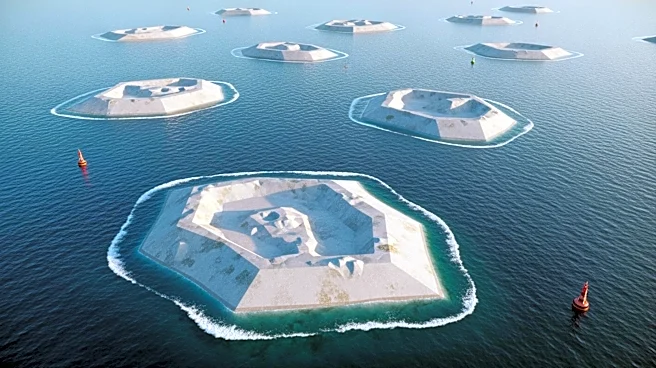
China has resumed large-scale island-building activities in the South China Sea, particularly at Antelope Reef, which is being transformed into a significant outpost. This development marks a return to China's
strategy of reshaping maritime geography to consolidate control over the region. The construction at Antelope Reef is focused on creating infrastructure that supports sustained operations, including berthing facilities and logistics platforms. This renewed activity comes after a period of relative pause since the mid-2010s, when China first drew global attention for its rapid island-building efforts. The current construction could potentially rival China's largest bases in the area, enhancing its operational reach and enabling persistent surveillance and deployment capabilities.
Why It's Important?
The resumption of island-building by China in the South China Sea has significant geopolitical implications. It underscores a shift from legal disputes over maritime claims to a focus on physical presence and infrastructure, which can shape control and influence in the region. This development challenges international law, as artificial islands do not generate maritime entitlements under the United Nations Convention on the Law of the Sea. The situation highlights the limitations of legal frameworks when not supported by enforcement and sustained presence. For the United States and its allies, this poses a strategic challenge, as China's actions could alter the balance of power in a region critical for global trade and security.
What's Next?
In response to China's actions, policymakers may need to consider strategies that go beyond legal arguments and diplomatic protests. Enhancing maritime domain awareness, strengthening regional partnerships, and supporting the capacity of coastal states to maintain their presence at sea could become increasingly important. The United States and its allies might also need to reassess their approach to maintaining a balance of power in the South China Sea, potentially increasing their own presence and engagement in the region to counter China's expanding influence.
Beyond the Headlines
The developments in the South China Sea reflect broader geopolitical dynamics, where physical presence and infrastructure are becoming more critical than legal claims. This trend could lead to a more fragmented international order, where power is increasingly determined by material capabilities rather than legal norms. The situation also raises ethical and legal questions about the enforcement of international law and the role of global institutions in managing disputes. As China continues to expand its maritime infrastructure, other regional players, such as Vietnam, may also increase their efforts to reinforce their claims, potentially leading to heightened tensions and competition in the region.