







What's Happening?
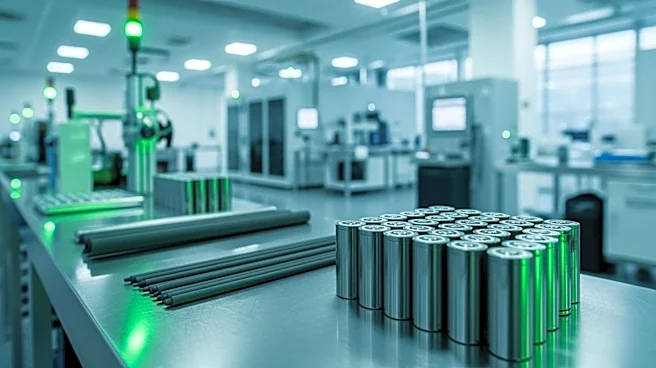
Recent advancements in inorganic chemistry are driving the development of clean energy technologies through the creation of tailored materials for various applications, including solar-to-fuel conversion, hydrogen production, CO2 reduction, fuel cells,
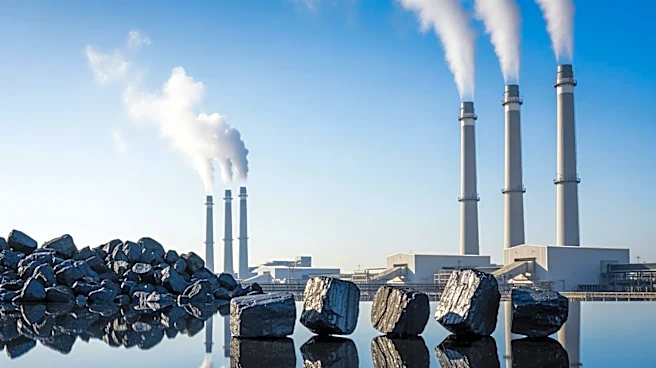
and batteries. These innovations focus on enhancing the activity, selectivity, and stability of low-carbon energy systems through techniques such as nanostructuring, surface engineering, and defect modulation. Understanding the relationships between atomic-scale structures, reaction mechanisms, and macroscopic performance is crucial for accelerating breakthroughs in clean energy materials. This initiative is part of a broader effort to develop sustainable energy solutions and reduce reliance on fossil fuels.
Why It's Important?
The push for clean energy solutions is critical in addressing climate change and reducing greenhouse gas emissions. By developing advanced materials that improve the efficiency and effectiveness of energy conversion and storage technologies, these innovations can significantly contribute to the transition towards a more sustainable energy future. The ability to produce clean energy more efficiently can lead to reduced costs and increased accessibility, benefiting both the environment and the economy. These advancements also support global efforts to meet climate targets and promote energy independence by reducing reliance on non-renewable resources.
What's Next?
The ongoing research in inorganic chemistry for clean energy is expected to continue, with a focus on further improving material performance and scalability. Collaboration between academic institutions, industry, and government agencies will be essential to bring these innovations to market. Future developments may include the integration of these materials into existing energy systems and the exploration of new applications. As the demand for clean energy solutions grows, continued investment in research and development will be necessary to maintain momentum and achieve long-term sustainability goals.