


What's Happening?
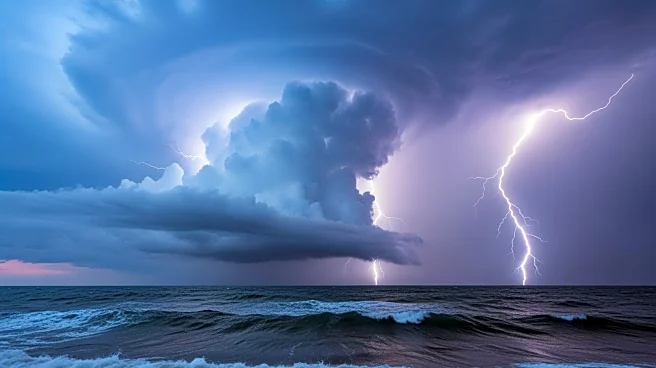
Recent research presented by I-I Lin, a chair professor at the National Taiwan University, highlights the increasing frequency of exceptionally intense tropical cyclones, prompting calls for a new storm classification, Category 6. This proposed category
would include storms with wind speeds exceeding 160 knots, surpassing the current maximum Category 5 threshold of 137 knots. The study, shared at the American Geophysical Union's 2025 Annual Meeting, attributes the rise in such powerful storms to expanding ocean hot spots fueled by climate change. These hot spots, particularly in the Western Pacific and North Atlantic, are characterized by deep layers of warm water, which prevent storms from weakening as they typically would. The research suggests that human-caused climate change accounts for up to 70% of the expansion of these hot spots, increasing the likelihood of Category 6 storms making landfall near populated areas.
Why It's Important?
The introduction of a Category 6 classification could significantly enhance public awareness and disaster preparedness. As climate change continues to warm ocean waters, the frequency and intensity of tropical cyclones are expected to rise, posing greater risks to coastal communities. Recognizing these extreme storms with a new category could lead to improved forecasting and emergency response strategies, potentially saving lives and reducing economic losses. The study underscores the urgent need for governments and communities to adapt to the evolving climate landscape, as the expansion of ocean hot spots suggests a growing threat from supercharged hurricanes.
What's Next?
If the proposal for a Category 6 classification gains traction, it could lead to changes in how meteorological agencies worldwide categorize and respond to tropical cyclones. This could involve revising current storm tracking and warning systems to better account for the increased risks associated with these powerful storms. Additionally, policymakers may need to consider new infrastructure and urban planning strategies to mitigate the impact of such extreme weather events on vulnerable coastal regions. The ongoing research into the effects of climate change on storm intensity will likely continue to inform these discussions.
Beyond the Headlines
The call for a new storm category highlights broader issues related to climate change and its impact on global weather patterns. As ocean temperatures rise, the potential for more frequent and severe storms could lead to long-term shifts in how societies approach disaster management and climate adaptation. This development also raises ethical questions about the responsibility of industrialized nations in addressing the root causes of climate change and supporting affected regions. The growing recognition of the need for a Category 6 classification reflects a deeper understanding of the complex interplay between human activity and natural phenomena.