






What's Happening?
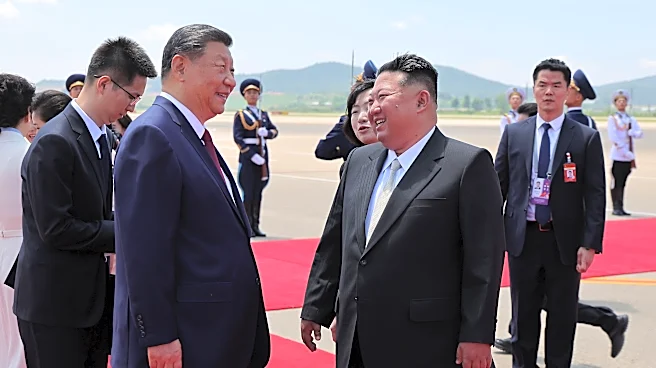
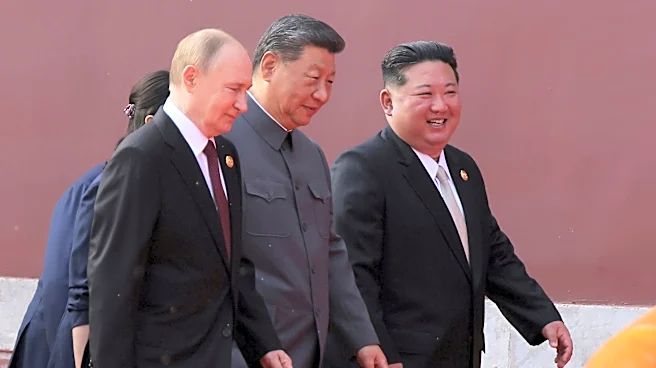
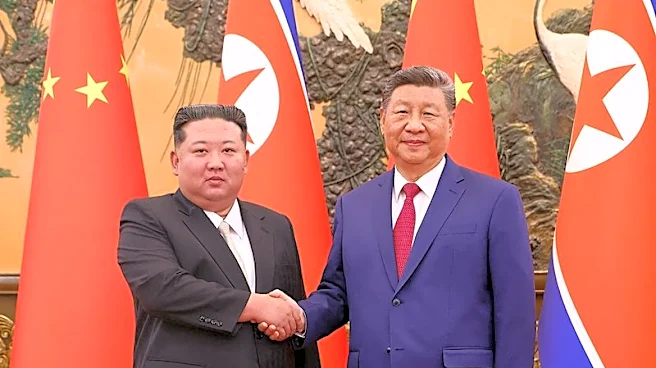
Chinese President Xi Jinping and North Korean leader Kim Jong-un have agreed to enhance cooperation in politics, economy, and culture during a summit in Pyongyang. This meeting marks Xi's first visit to North Korea in seven years, highlighting the significance
of the event. The summit emphasized the 'One China principle,' with Kim expressing full support, which aligns with China's view that both sides of the Taiwan Strait belong to one country. The visit included symbolic gestures such as planting a fir tree to signify 'ever-renewing friendship.' Analysts noted that while North Korea emphasized equal partnership, China focused on practical state-to-state ties. The summit also celebrated the 65th anniversary of the friendship treaty between the two nations.
Why It's Important?
The strengthening of ties between China and North Korea has significant implications for international relations, particularly concerning the United States. China is North Korea's largest trade partner and has historically been its main diplomatic supporter. This renewed cooperation could impact U.S. diplomatic strategies, especially as President Trump has shown interest in restarting talks with Kim Jong-un. The summit's focus on solidarity against U.S. influence and Taiwan-related issues underscores the geopolitical tensions in the region. The enhanced relationship may also affect the enforcement of U.N. sanctions on North Korea, as China has been known to provide clandestine support to its neighbor.
What's Next?
The summit sets the stage for potential future collaborations in trade, tourism, and agriculture between China and North Korea. Xi's visit may lead to increased economic aid and joint projects, which could bolster North Korea's economy. The meeting also suggests a strategic alignment against U.S. policies, potentially complicating future diplomatic efforts by the U.S. to address North Korea's nuclear ambitions. The international community will likely monitor the developments closely, especially regarding any shifts in China's enforcement of sanctions and its diplomatic stance on North Korea's nuclear program.