


What's Happening?
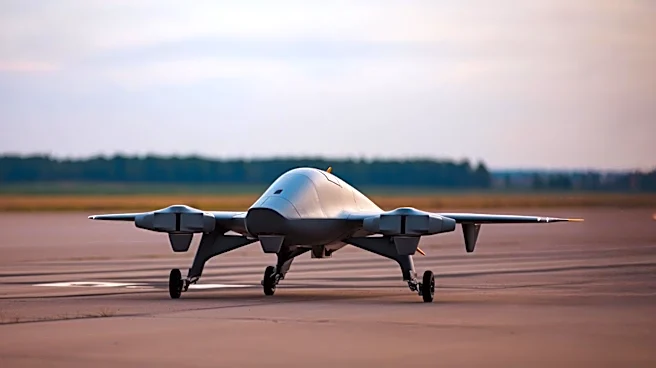
Taiwanese Vice-President Hsiao Bi-khim has announced plans for Taiwan to become a leading Asian hub for unmanned-systems supply chains. Speaking at the opening of the 2026 Taiwan International Drone Forum and International Drone Academy, Hsiao emphasized
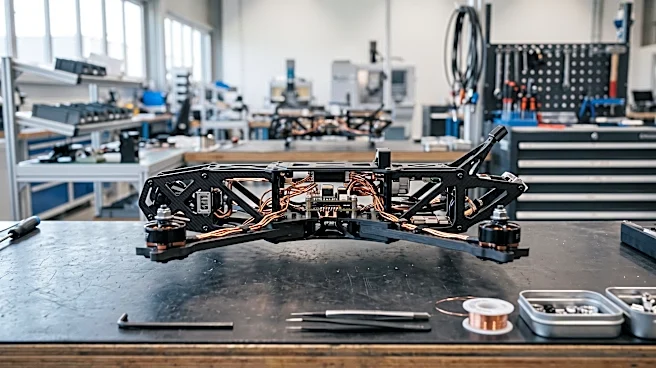
that unmanned systems are a top priority for Taiwan's defense strategy. The International Drone Academy, a private organization, aims to bolster Taiwan's unmanned systems industry through talent development, geopolitical research, and technical standards certification to foster international partnerships. This initiative comes as China implements new export controls on unmanned aerial vehicles (UAVs) and related technologies, effective November 18, requiring authorization for specified exports. Hsiao highlighted three key priorities: establishing a trusted, non-Chinese supply chain, advancing edge artificial intelligence (AI) and software-defined innovation, and promoting international cooperation and drone diplomacy. She stressed Taiwan's commitment to a "100% non-red supply chain" to ensure cybersecurity and operational integrity of microprocessors, flight controllers, optical payloads, and batteries.
Why It's Important?
Taiwan's ambition to establish a non-Chinese unmanned-systems supply chain holds significant implications for global technology and defense sectors, particularly for the U.S. By focusing on a "100% non-red" supply chain, Taiwan aims to reduce reliance on Chinese components, which could enhance supply chain security and resilience for democratic nations. This move aligns with broader U.S. efforts to diversify critical technology supply chains away from potential adversaries. The development of advanced AI and software-defined innovation in Taiwan's unmanned systems industry could also provide cutting-edge solutions for defense applications, benefiting U.S. and allied military capabilities. Furthermore, increased international cooperation in drone technology could foster interoperability and shared defense capabilities among like-minded countries, strengthening collective security in the Indo-Pacific region. This strategic shift could also create new opportunities for U.S. companies in collaboration with Taiwan's burgeoning unmanned systems sector, while potentially impacting Chinese dominance in certain segments of the drone market.
What's Next?
The implementation of Taiwan's strategy will likely involve continued investment in research and development, talent cultivation, and the establishment of international partnerships. The International Drone Academy is expected to play a crucial role in these efforts, focusing on technological certification and pilot training. As China's new export controls on UAVs take effect, Taiwan's push for a non-Chinese supply chain will become even more critical, potentially leading to increased demand for components and technologies from alternative sources. This could prompt further collaboration between Taiwan and countries like the U.S. to develop secure and reliable supply chains. Future developments may include specific agreements with international partners for joint development, manufacturing, and training in unmanned systems. The success of this initiative will be closely watched by global defense and technology industries, as it could set a precedent for other nations seeking to reduce their dependence on Chinese technology.
Beyond the Headlines
Taiwan's strategic pivot towards becoming an unmanned-systems hub extends beyond immediate defense needs, touching upon deeper geopolitical and economic implications. The emphasis on a "100% non-red" supply chain reflects a broader global trend of de-risking and decoupling from Chinese technology, driven by concerns over national security, intellectual property, and human rights. This initiative could accelerate the formation of alternative technology ecosystems, fostering innovation and competition outside of China's influence. Ethically, it raises questions about the responsible development and deployment of autonomous weapons systems, an area where international cooperation on standards and norms will be crucial. Economically, it could lead to a re-shaping of global supply chains for critical technologies, potentially creating new centers of manufacturing and innovation. Culturally, it reinforces Taiwan's identity as a technologically advanced and democratically aligned partner, further solidifying its position on the global stage amidst increasing geopolitical tensions.