
What's Happening?
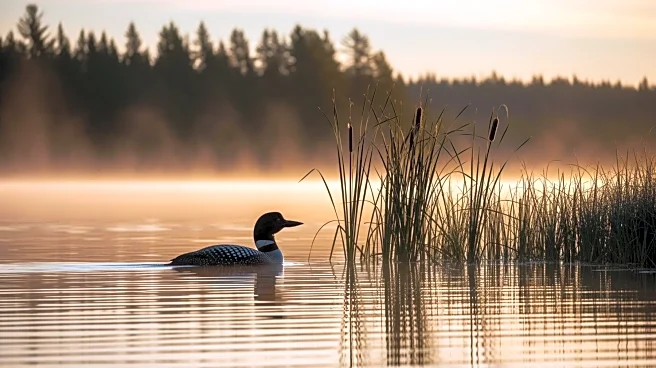
Maine's loon population is experiencing growth, with more of these distinctive black-and-white waterbirds filling the state's lakes and ponds. According to Maine Audubon, the population in the southern
half of the state is estimated at 3,174 adult loons and 568 chicks, marking a significant increase from previous years. Conservation efforts, including bans on lead fishing tackle and regulations on boat speeds, have contributed to this growth. Despite these positive signs, experts remain cautious, noting that it will take several more years to determine if this is a sustainable trend. The loons, which are not listed under the U.S. Endangered Species Act but are considered threatened in some states, face challenges such as getting trapped by ice during winter migrations.
Why It's Important?
The increase in Maine's loon population is a positive indicator of successful conservation efforts, which could serve as a model for other regions. The loons are an important part of the ecosystem, and their recovery can have broader environmental benefits. However, the situation remains delicate, as loons are still considered threatened in some areas. The ongoing conservation measures are crucial for maintaining and potentially increasing the population further. This development highlights the importance of environmental policies and their impact on wildlife preservation.
What's Next?
Continued monitoring and conservation efforts are essential to ensure the long-term recovery of Maine's loon population. Conservationists will need to maintain and possibly expand current measures, such as restrictions on lead fishing tackle and boat speeds, to protect the loons' habitat. Additionally, public awareness and involvement in conservation efforts could play a significant role in supporting these initiatives. The success of these efforts could influence similar conservation strategies in other regions facing wildlife preservation challenges.