





What's Happening?
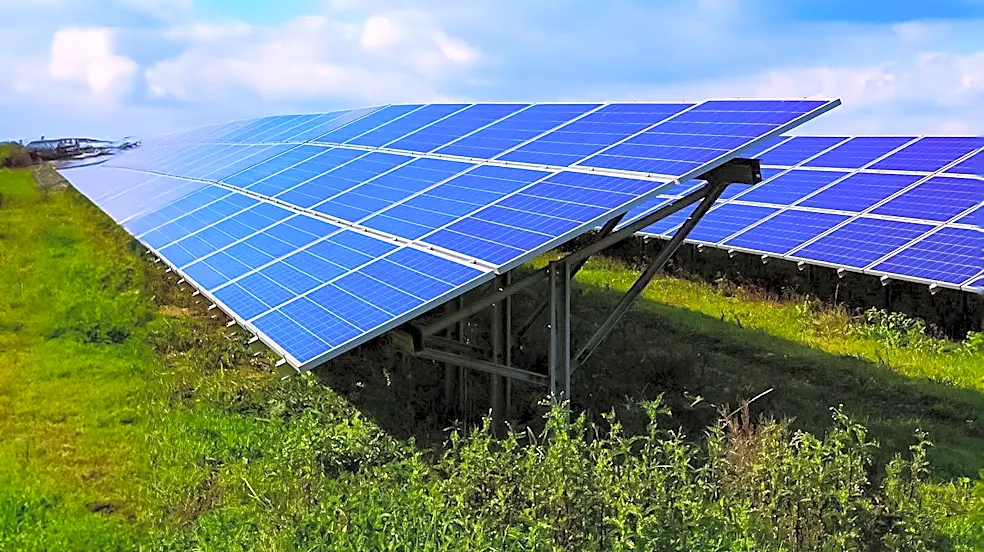
The International Finance Corporation (IFC) has approved up to $363 million in financing for the Abydos Solar II project in Egypt. This project is significant as it combines 1,000 MW of solar power generation with 600 MWh of battery storage. This development
is part of a broader trend in the Middle East and Africa, which is projected to be the fastest-growing geography in the solar energy and battery storage market, with a projected 17.8% Compound Annual Growth Rate (CAGR) through 2032. Another notable project in Egypt, Scatec’s 1.1 GW solar and 200 MWh BESS project at Nagaa Hammadi, also received $479.1 million in financing. These projects highlight the critical role of development-finance participation in early large-scale deployments, especially where long-tenor capital is required. Clean energy investment in Africa has seen substantial growth, nearly doubling from $17 billion in 2019 to almost $40 billion in 2024.
Why It's Important?
The IFC's substantial financing for the Abydos Solar II project is crucial for accelerating Egypt's transition to renewable energy and enhancing its energy security. The integration of large-scale battery storage with solar power addresses the intermittency challenges of solar energy, ensuring a more reliable and stable power supply. This model is vital for grids with high solar penetration, as it allows for energy dispatch during peak demand periods, even after sunset. The significant investment from development finance institutions like the IFC demonstrates confidence in the economic viability and environmental benefits of such projects. This support is particularly important for emerging markets like Egypt, where access to long-term, affordable capital can be a barrier to large-scale renewable energy development. The growth of the solar energy and battery storage market in the Middle East and Africa, driven by such projects, signifies a major shift towards sustainable energy solutions and can create new economic opportunities, including job creation and technological advancements.
What's Next?
The approval of IFC financing paves the way for the implementation and construction of the Abydos Solar II project. This will involve detailed engineering, procurement, and construction phases, leading to the eventual commissioning of the 1,000 MW solar and 600 MWh battery storage facility. The success of this project, alongside others like Scatec’s Nagaa Hammadi project, will likely encourage further investment in similar integrated solar and storage solutions across Egypt and the wider Middle East and Africa region. The continued growth in clean energy investment in Africa suggests a sustained momentum for renewable energy development. Future developments will focus on optimizing the performance of these integrated systems, managing grid integration challenges, and exploring innovative financing mechanisms to scale up renewable energy deployment even further.
Beyond the Headlines
The Abydos Solar II project, with its substantial solar and battery storage capacity, represents a paradigm shift in how renewable energy projects are conceived and financed in developing regions. It moves beyond simple solar generation to a more sophisticated, dispatchable clean energy solution. This integrated approach is critical for grid stability and reliability, making renewable energy a more viable and attractive alternative to traditional fossil fuel-based power generation. The involvement of development finance institutions like the IFC also highlights a commitment to sustainable development goals, including climate action and affordable clean energy. Furthermore, the rapid growth of clean energy investment in Africa indicates a broader economic transformation, positioning the continent as a key player in the global energy transition. This trend could lead to significant technological transfer, local capacity building, and the development of new industries, fostering long-term economic resilience and environmental sustainability.