






What's Happening?
The Ministry of Diaspora Affairs and Combating Antisemitism and the National Public Diplomacy Directorate in the Prime Minister's Office have launched a campaign titled 'The UN's Lie Industry.' This initiative aims to expose what they describe as 'systematic
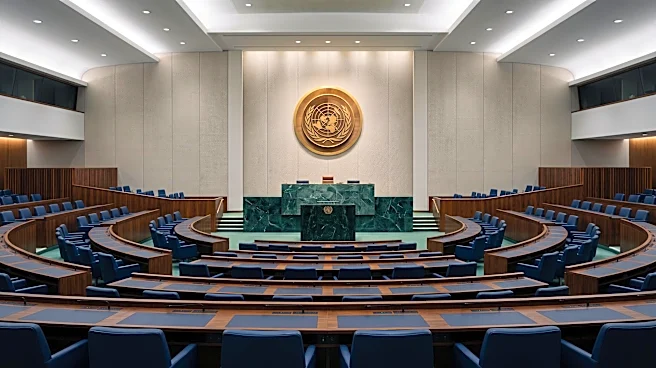
and false bias against Israel' as the United Nations General Assembly commences. The campaign includes a video depicting the UN General Assembly hall with parrots, symbolizing various countries, repeatedly chanting 'Blame Israel.' The video concludes with the message, 'Repeating lies doesn’t make them true.' Additionally, a website has been launched in cooperation with the National Security Council (NCS) to provide research sources documenting how information perceived as biased against Israel has been gathered, endorsed, and distributed globally since the October 7 attacks. The website addresses topics such as information manipulation, an organized culture hostile to Israel, false claims of starvation in Gaza, alleged Hamas infiltration into UNRWA, and the fabrication of a 'genocide' narrative. It also features testimonies from UN personnel regarding internal silencing and persecution.
Why It's Important?
This campaign is significant as it directly challenges the credibility and impartiality of the United Nations, a major international body. By alleging 'systematic and false bias,' Israel is attempting to reshape the narrative surrounding its actions and the UN's reporting on the conflict. This could lead to increased scrutiny of UN reports and resolutions concerning Israel, potentially impacting diplomatic relations and international aid efforts. The campaign's focus on 'false blood libels' and 'false starvation campaigns' suggests an effort to counter specific criticisms leveled against Israel, particularly regarding the situation in Gaza. If successful, this could influence public opinion and the policies of member states, potentially diminishing the UN's moral authority on issues related to the Israeli-Palestinian conflict. Conversely, it could also be perceived as an attempt to deflect criticism, further polarizing international discourse.
What's Next?
The launch of 'The UN's Lie Industry' campaign coincides with the start of the UN General Assembly, suggesting that Israel intends to make this a prominent issue during the proceedings. It is likely that Israeli representatives will use this platform to reiterate the campaign's claims and challenge UN reports and statements they deem biased. Other nations and UN officials may respond to these allegations, potentially leading to heated debates and further diplomatic tensions. The campaign's website, with its 'comprehensive research sources,' will likely be cited in future discussions and could become a point of contention. The testimonies from UN personnel regarding 'internal silencing and persecution' could also prompt internal investigations or calls for greater transparency within the UN system. The long-term impact will depend on how effectively Israel can sway international opinion and whether the UN or its member states take concrete steps to address the concerns raised.
Beyond the Headlines
Beyond the immediate diplomatic implications, this campaign touches upon deeper issues of information warfare and the struggle for narrative control in international relations. In an era of widespread misinformation, the accusation of an 'industry of lies' against a major international organization like the UN highlights the challenges in establishing objective truth and accountability. The campaign's use of a video depicting parrots repeating accusations underscores a critique of what Israel perceives as an echo chamber within the UN, where unverified claims gain traction through repetition. This raises questions about the mechanisms through which international bodies gather and disseminate information, and the potential for political agendas to influence reporting. The campaign also implicitly questions the role of international law and human rights organizations if their findings are deemed systematically biased. This could lead to a broader re-evaluation of how international organizations operate and how their reports are received and interpreted by member states and the public.