



What's Happening?
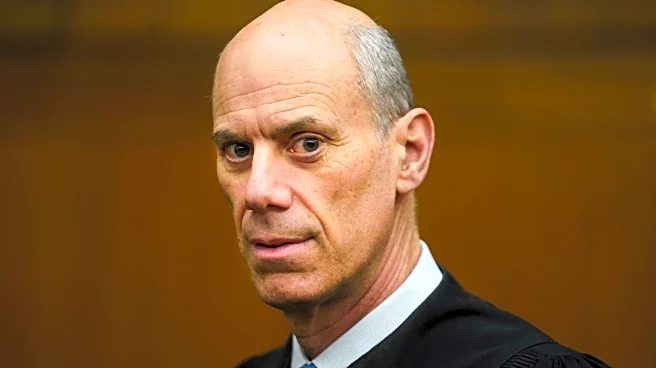
A federal judge has upheld a Department of Homeland Security (DHS) policy that requires lawmakers to provide advance notice before visiting immigration facilities. This decision was made by District of Columbia federal Judge Jia Cobb, who denied a request
from a group of Democratic lawmakers challenging the policy. The policy, instituted by Homeland Security Secretary Kristi Noem, mandates a seven-day notice for oversight visits. The judge's decision was based on procedural grounds, emphasizing that the denial was not a judgment on the policy's legality. The policy has been contentious, as it conflicts with a 2019 appropriations law allowing unannounced visits by Congress members to federal facilities holding immigrants. The issue arose after Minnesota lawmakers were denied an unannounced visit following a fatal shooting by a federal immigration officer. The DHS policy has been challenged by several Democratic lawmakers, who argue it violates their oversight rights.
Why It's Important?
The ruling has significant implications for congressional oversight of immigration facilities. By upholding the DHS policy, the decision limits lawmakers' ability to conduct spontaneous inspections, potentially affecting transparency and accountability in immigration enforcement. This policy could impact how Congress monitors conditions and operations within these facilities, which have been under scrutiny for their treatment of immigrants. The decision also highlights the ongoing tension between the executive branch and Congress over oversight powers. Lawmakers argue that the policy undermines their ability to respond swiftly to issues within immigration facilities, which could affect public trust in the government's handling of immigration enforcement.
What's Next?
The Democratic lawmakers who challenged the policy may seek further legal avenues to contest the ruling. They could file an amended complaint or a supplemental brief to address the procedural issues cited by Judge Cobb. Additionally, there may be legislative efforts to reinforce Congress's oversight authority over immigration facilities. The DHS and Secretary Noem may continue to defend the policy, arguing its necessity for operational security and coordination. The outcome of this legal and legislative battle could set a precedent for how oversight is conducted in other federal facilities.