


What's Happening?
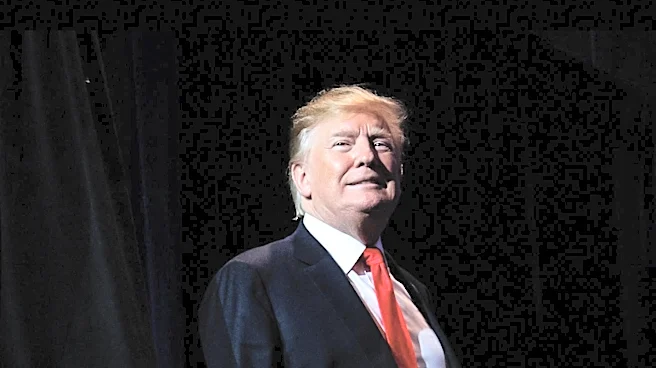
President Trump has asked a federal judge to deny the BBC's request for court assistance in obtaining testimony and documents from his family members—Ivanka Trump, Jared Kushner, and Donald Trump Jr.—in connection with his $10 billion defamation lawsuit
against the British broadcaster. Trump's personal lawyers argue that the BBC is attempting to gain 'politically-driven leverage' by serving these subpoenas. The lawsuit, filed in December, alleges that the BBC deceptively edited portions of President Trump's January 6, 2021, speech, intentionally misrepresenting his statements. The BBC had previously attempted to serve subpoenas in person, but these attempts were unsuccessful, leading them to seek court permission for service via certified mail. U.S. District Judge Jeffrey Kuntz, who was nominated by President Trump, is currently presiding over the dispute, which was recently reassigned to him. A trial date has been set for February.
Why It's Important?
This legal battle highlights the ongoing tensions between political figures and media organizations, particularly concerning the portrayal of events and statements. The outcome of this dispute could set precedents for how public figures can challenge media narratives and the extent to which media outlets can compel testimony from individuals associated with those figures. For President Trump, the lawsuit is part of a broader effort to control his public image and challenge what he perceives as biased reporting. For the BBC, the ability to gather information from key witnesses is crucial for its defense against the defamation claims. The involvement of President Trump's family members in the discovery process adds a layer of complexity, raising questions about the scope of journalistic inquiry versus personal privacy and political motivations. The case also underscores the legal challenges involved in proving defamation, especially when it concerns public statements and their interpretation.
What's Next?
U.S. District Judge Jeffrey Kuntz will rule on the BBC's request to serve subpoenas on President Trump's family members. This decision will determine the next steps in the discovery phase of the defamation lawsuit. Depending on the ruling, the BBC may proceed with obtaining testimony and documents from Ivanka Trump, Jared Kushner, and Donald Trump Jr., which could significantly impact the evidence presented in court. The case is scheduled for trial in February, suggesting that both parties will continue to prepare their arguments and gather evidence in the coming months. The BBC has already apologized to President Trump for the misleading edit but maintains that it did not defame him, indicating a continued legal contest over the interpretation and impact of the broadcast.
Beyond the Headlines
Beyond the immediate legal implications, this case touches upon fundamental issues of media ethics, freedom of the press, and the public's right to accurate information. The accusation of 'politically-driven leverage' by President Trump's lawyers suggests a deeper narrative about the weaponization of legal processes in political discourse. The outcome could influence how media organizations approach reporting on political figures, potentially leading to more cautious editing practices or, conversely, reinforcing the importance of robust investigative journalism. It also raises questions about the role of the judiciary in mediating disputes between powerful individuals and media entities, particularly when political motivations are alleged. The case could contribute to the ongoing debate about media credibility and the challenges of maintaining journalistic integrity in a highly polarized environment.