

What's Happening?
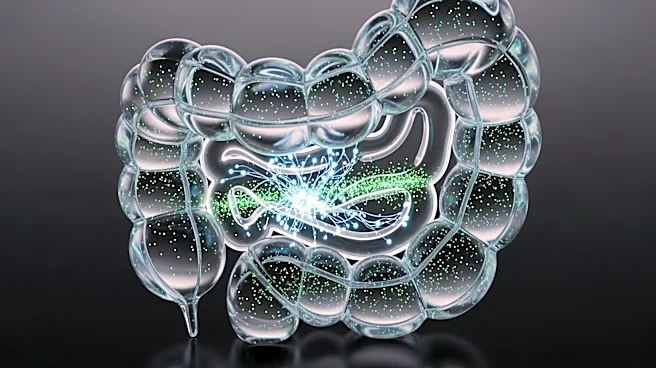
Scientists have discovered a set of biological markers that could significantly enhance the detection and treatment of gastrointestinal diseases (GIDs) such as gastric cancer (GC), colorectal cancer (CRC), and inflammatory bowel disease (IBD). The research,
conducted by teams from the University of Birmingham and University Hospitals Birmingham NHS Foundation Trust, utilized advanced machine learning and AI-based tools to analyze microbiome and metabolome data from patients. The study found that specific gut bacteria and metabolites are closely linked to these diseases, offering the potential for earlier and less invasive diagnosis. The findings, published in the Journal of Translational Medicine, suggest that models trained on data from one condition could predict markers for another, indicating shared biological pathways across these diseases.
Why It's Important?
The identification of these gut biomarkers is crucial as it could lead to significant improvements in the early detection and treatment of serious gastrointestinal diseases. Current diagnostic methods like endoscopy and biopsies, while effective, are invasive and expensive. The new approach could provide a non-invasive alternative, allowing for earlier diagnosis and more personalized treatment plans. This advancement could benefit patients by reducing the need for invasive procedures and potentially improving outcomes through earlier intervention. Additionally, the ability to predict multiple diseases from a single set of biomarkers could streamline diagnostic processes and reduce healthcare costs.
What's Next?
The researchers plan to further explore the clinical applications of their findings, including the development of non-invasive diagnostic tests and targeted therapies based on the identified biomarkers. They aim to validate their models with larger and more diverse patient groups to ensure the reliability and applicability of the biomarkers across different populations. Future research will also investigate whether these biomarkers can predict additional related diseases, potentially leading to universal diagnostic tools for various gastrointestinal conditions.
Beyond the Headlines
This research highlights the potential for AI and machine learning to revolutionize medical diagnostics by identifying complex patterns in biological data. The study's cross-disease analysis underscores the interconnected nature of various gastrointestinal diseases, suggesting that a deeper understanding of these connections could lead to more comprehensive treatment strategies. The findings also raise ethical considerations regarding data privacy and the use of AI in healthcare, emphasizing the need for careful regulation and oversight as these technologies become more integrated into medical practice.