






What's Happening?
Recent studies published in the journal Nature have revealed new insights into the domestication of dogs, suggesting that the timeline for when dogs became companions to humans has been pushed back by at least 5,000 years. Researchers examined ancient
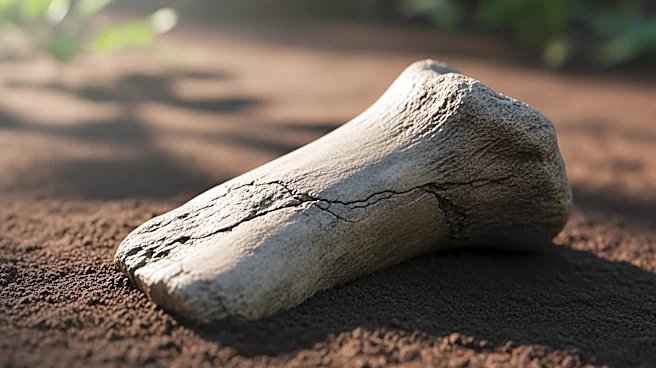
canine DNA from over 200 dog and wolf remains, with the oldest dating back to approximately 15,800 years ago. This research indicates that dogs descended from an ancient population of gray wolves in Europe or Asia, which gradually adapted to living with humans and became less aggressive. The studies highlight the longstanding relationship between humans and dogs, which has persisted for thousands of years. Despite the new findings, the exact time and location of dog domestication remain uncertain, as scientists continue to study DNA from ancient dog and wolf remains to uncover more details about the earliest dogs.
Why It's Important?
The findings are significant as they provide a deeper understanding of the historical relationship between humans and dogs, which has implications for the study of human migration and societal development. The research suggests that dogs were already widespread across Western Europe and Asia 14,200 years ago, living with hunter-gatherer humans before the advent of agriculture. This relationship likely influenced human societies, as dogs may have played roles in hunting, guarding, and companionship. The study also highlights the genetic consistency of dogs in Europe compared to those in Asia and the Americas, reflecting different human migration patterns. Understanding the origins of dog domestication can offer insights into human history and the development of civilizations.
What's Next?
Further research is needed to pinpoint the exact timing and circumstances of dog domestication. Scientists aim to continue studying ancient DNA to uncover more details about the appearance and roles of early dogs. This ongoing research may reveal more about how dogs have influenced human societies and how they have adapted alongside humans over millennia. As scientists delve deeper into the genetic history of dogs, they may uncover new information that could reshape our understanding of human-animal relationships throughout history.
Beyond the Headlines
The study of ancient dog DNA not only sheds light on the history of domestication but also raises questions about the ethical treatment and conservation of modern dog breeds. As researchers learn more about the genetic makeup of ancient dogs, there may be implications for breeding practices and the preservation of genetic diversity in contemporary dog populations. Additionally, the research underscores the importance of interdisciplinary collaboration in uncovering historical truths, combining genetics, archaeology, and anthropology to piece together the story of human and animal evolution.