






What's Happening?
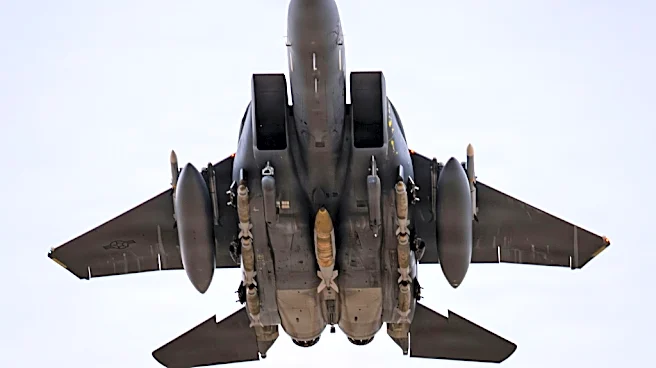
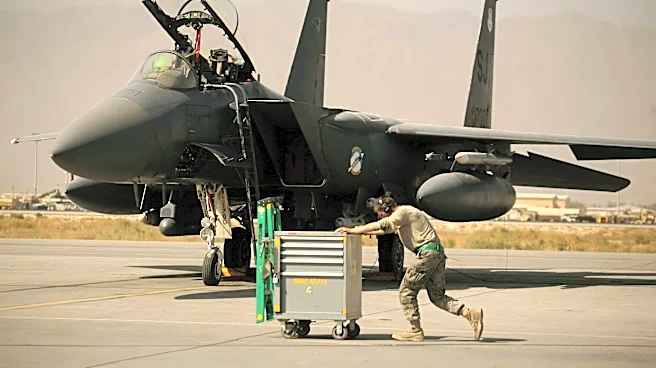
Iran has announced that its new air defense system successfully shot down a U.S. F-15E Strike Eagle fighter jet. The incident reportedly occurred in the southwestern province of Kohgiluyeh and Boyer-Ahmad, near the Iraqi border. Iran's Khatam al-Anbiya
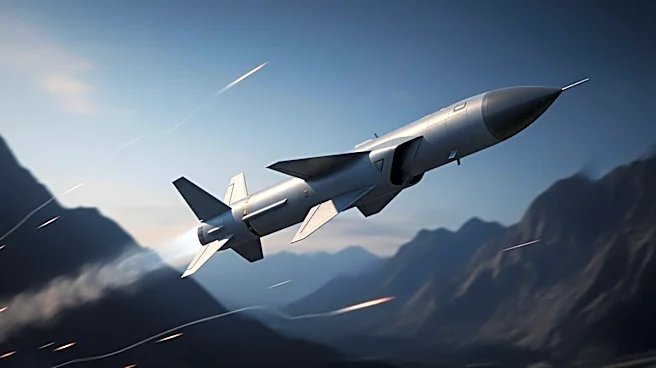
joint military command claimed the use of the Third Khordad missile system, a mobile medium-range surface-to-air defense system, to achieve this. The U.S. aircraft was part of ongoing military operations against Iran, which have seen over 12,300 targets hit since the conflict began on February 28. The downed aircraft's pilots ejected, with one rescued and the other still missing. An A-10 Thunderbolt II was also hit during a rescue mission but managed to reach Kuwaiti airspace before crashing, with the pilot ejecting safely.
Why It's Important?
This development marks a significant escalation in the conflict between the U.S. and Iran, highlighting the increasing capabilities of Iran's military technology. The successful downing of a U.S. fighter jet by Iran's defense system could embolden Tehran and complicate U.S. military operations in the region. The incident also raises concerns about the safety of U.S. military personnel and the potential for further military engagements. The loss of the F-15E, valued at $31 million, represents a substantial material and strategic setback for the U.S. military. Additionally, the ongoing conflict and Iran's military advancements could impact regional stability and international relations.
What's Next?
The U.S. military is likely to reassess its strategies and defense measures in response to Iran's demonstrated air defense capabilities. Efforts to locate the missing U.S. pilot will continue, with Iran reportedly offering a bounty for his capture. The situation may prompt diplomatic efforts to de-escalate tensions, although further military engagements remain a possibility. The international community will be closely monitoring the situation, as any escalation could have broader implications for global security and economic stability.