



What's Happening?
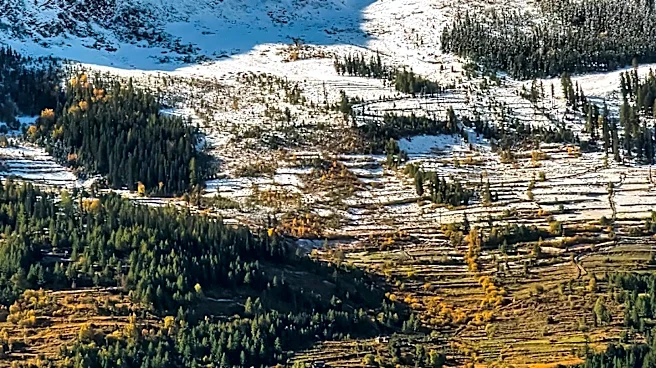
Winter has made an early appearance in New England, with the first snowflakes of the season falling overnight on Mount Washington in New Hampshire’s White Mountains. The snowfall covered parts of the Auto Road, offering visitors an initial glimpse of the colder
months ahead. The Mt. Washington Auto Road confirmed the event in a Facebook post, stating, 'Welcome, winter! The first snowflakes of the season fell overnight,' and shared photographs of snow-covered roads and rocks. Despite the inclement weather, the Auto Road remains accessible to cars, though a winter cutoff at 4,200 feet is currently in effect. The popular tourist attraction encouraged visitors to witness the early signs of winter for themselves.
Why It's Important?
The early snowfall on Mount Washington is a significant seasonal marker for New England, signaling the transition from autumn to winter. For the tourism industry in New Hampshire, particularly in the White Mountains region, this event can generate early interest in winter sports and activities, potentially boosting visitor numbers. It serves as a reminder for residents and travelers to prepare for colder weather conditions and adjust travel plans accordingly, especially for mountainous areas. The Mount Washington Auto Road's continued operation, even with a winter cutoff, highlights the region's adaptability to changing weather and its commitment to maintaining accessibility for tourists. This natural phenomenon also contributes to the unique appeal of New Hampshire's landscape, drawing visitors who seek to experience the dramatic seasonal shifts.
What's Next?
As the first snowflakes have fallen, Mount Washington and the surrounding White Mountains region will likely continue to transition into full winter conditions. Visitors planning trips to the area should monitor weather forecasts and road conditions, as more significant snowfall and colder temperatures are expected in the coming weeks and months. The Mount Washington Auto Road will likely adjust its operational status based on weather severity, potentially implementing further restrictions or closures as winter progresses. Businesses catering to winter tourism, such as ski resorts and winter sports outfitters, will begin their preparations for the upcoming season, anticipating increased visitor traffic. The early snow also serves as a natural cue for local communities to prepare for winter, including snow removal and emergency services.
Beyond the Headlines
The early snowfall on Mount Washington, while a common occurrence for the region, can also be viewed within the broader context of climate patterns and their potential shifts. Mount Washington is renowned for its extreme weather, often serving as an indicator of broader atmospheric conditions. While a single early snowfall doesn't definitively signal a trend, it contributes to the ongoing narrative about seasonal variability and the potential impacts of climate change on regional weather patterns. For scientists and meteorologists, such events provide valuable data points for studying atmospheric dynamics and long-term climate trends. For the general public, it's a tangible reminder of the power and unpredictability of nature, prompting reflection on environmental changes and the importance of preparedness for extreme weather events.