







What's Happening?
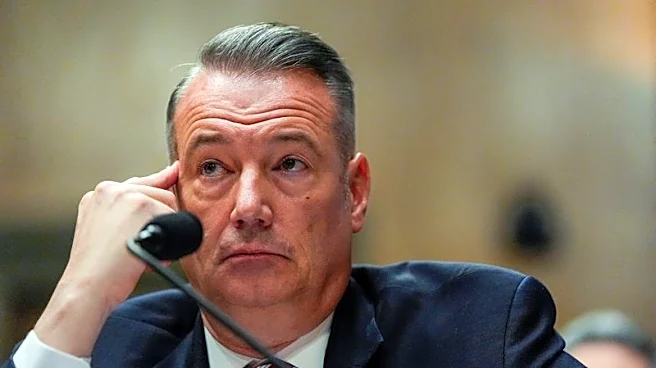
President Donald Trump is planning to nominate Cameron Hamilton to lead the Federal Emergency Management Agency (FEMA) less than a year after Hamilton was dismissed from the role. Hamilton, a former Navy SEAL and congressional candidate, initially led
FEMA at the start of Trump's second term. His tenure was marked by internal conflicts, particularly with then-Homeland Security Secretary Kristi Noem and Trump ally Corey Lewandowski, over the administration's plans to dismantle FEMA and transfer disaster response responsibilities to the states. Despite his limited experience in disaster management, Hamilton opposed the plan to eliminate FEMA, advocating instead for significant reforms to preserve the agency. His stance led to tensions within the administration, culminating in his firing shortly after he testified before Congress, where he publicly disagreed with the administration's position. The decision to reappoint Hamilton comes as the administration, under new Homeland Security Secretary Markwayne Mullin, seeks to reverse some of Noem's policies and improve FEMA's operations.
Why It's Important?
The reappointment of Cameron Hamilton as FEMA chief signals a potential shift in the Trump administration's approach to disaster management. Under Noem's leadership, FEMA experienced significant workforce reductions and policy changes that drew criticism from state and local officials, as well as Republican lawmakers. Hamilton's return could indicate a move towards stabilizing the agency and addressing the backlog in disaster funding. This development is crucial for communities across the U.S. that rely on FEMA for disaster relief and recovery. The administration's decision to reconsider its earlier stance on dismantling FEMA reflects the importance of maintaining a federal agency dedicated to managing natural disasters, especially in light of increasing climate-related events. Hamilton's leadership will be pivotal in navigating these challenges and restoring confidence in FEMA's ability to effectively respond to emergencies.
What's Next?
As Cameron Hamilton prepares to reassume leadership of FEMA, the agency awaits a final report from the FEMA Review Council, which was established to evaluate and propose reforms for the agency. Hamilton's reappointment may lead to a reevaluation of previous policies and a focus on enhancing FEMA's efficiency and responsiveness. The administration's shift in tone under Secretary Mullin suggests a willingness to collaborate with state and local governments to improve disaster response efforts. Stakeholders, including political leaders and community organizations, will likely monitor Hamilton's actions closely to ensure that FEMA's operations align with the needs of affected communities. The outcome of these efforts could have significant implications for the administration's disaster management strategy and its relationship with state and local authorities.