




What's Happening?
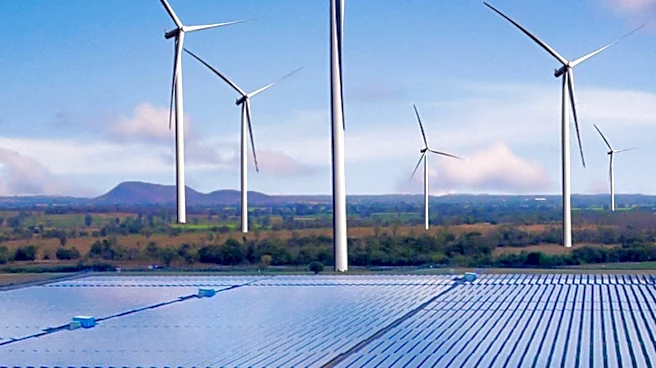
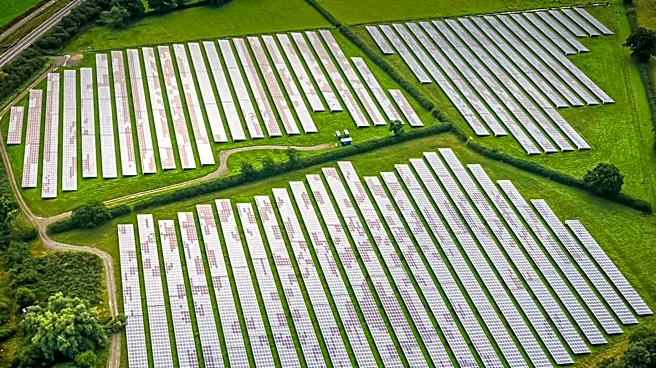
Solar power is increasingly being integrated into agricultural practices in the U.S. through agrivoltaics, which involves using land for both solar energy production and agriculture. This dual-use approach allows farmers to generate additional income
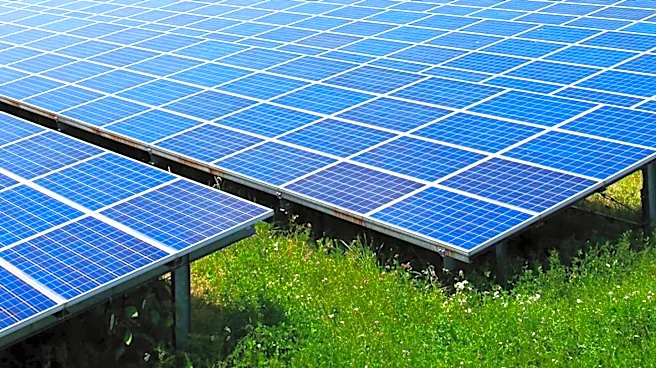
while continuing their farming activities. Solar panels are installed above or around crops, providing shade and reducing water evaporation, which can enhance crop growth and solar panel efficiency. This method is gaining popularity as it addresses criticisms of solar farms occupying arable land solely for energy production. In California, large-scale solar projects are being developed on fallow agricultural land, with plans to install significant solar capacity to meet renewable energy goals.
Why It's Important?
The adoption of agrivoltaics represents a significant shift in how land is utilized for both agriculture and energy production. This approach not only provides farmers with a new revenue stream but also supports the transition to renewable energy, which is crucial for addressing climate change. By optimizing land use, agrivoltaics can help mitigate land-use conflicts and garner public and governmental support for solar projects. The development of such projects in states like California and Virginia highlights the potential for agrivoltaics to contribute to state and national renewable energy targets, while also supporting the agricultural sector.
What's Next?
As agrivoltaics continues to gain traction, more states may explore similar projects to balance agricultural needs with renewable energy goals. The success of current projects could lead to increased investment and policy support for dual-use land initiatives. In California, the ongoing development of solar fields on idle farmland is expected to significantly contribute to the state's renewable energy capacity. Other states, like Virginia, are also exploring ways to integrate agrivoltaics into their energy strategies. The continued expansion of agrivoltaics could play a key role in achieving broader sustainability and energy independence objectives.