






What's Happening?
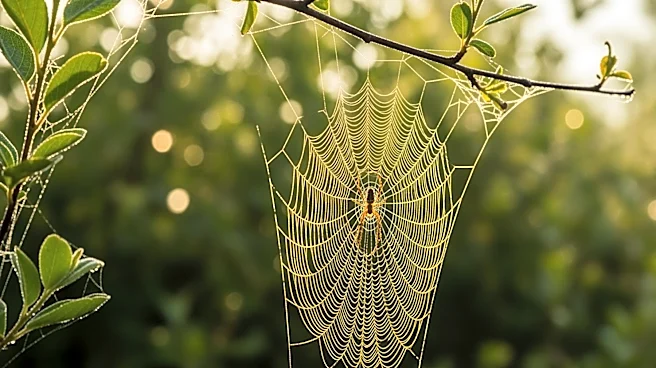
The Joro spider, an invasive species originally from Asia, has been increasingly spotted across the United States, including California. First identified in Georgia in 2014, these spiders are known for their large size and expansive webs, which can reach
up to 10 feet. Despite their intimidating appearance, experts like Pat Wooden from Virginia Tech assure that they are not medically significant and pose no real threat to humans or pets. The spiders disperse by 'ballooning,' releasing silk that catches the wind, allowing them to travel long distances. They have become prevalent in southeastern states and are slowly making their way across the country.
Why It's Important?
The spread of the Joro spider highlights the challenges of managing invasive species in the U.S. While they do not pose a direct threat to humans, their presence can impact local ecosystems by competing with native species for resources. Their ability to control pest populations, such as mosquitoes and stink bugs, could be beneficial, but their unchecked spread may disrupt existing ecological balances. Understanding and monitoring their distribution is crucial for environmental management and conservation efforts.
What's Next?
As the Joro spider continues to spread, researchers and environmental agencies may increase efforts to track their movement and study their ecological impact. Public awareness campaigns could be initiated to educate communities about the spiders, emphasizing their non-threatening nature and potential benefits in pest control. Long-term strategies may involve studying their interactions with native species to ensure ecological balance.