
What's Happening?
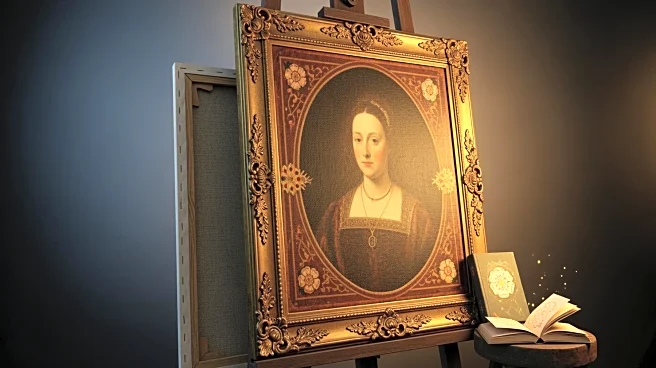
A new analysis of a 16th-century portrait of Anne Boleyn, held at Hever Castle in the UK, has uncovered a deliberate depiction of five fingers on each hand. This detail is believed to counter historical
claims that Boleyn was a witch with physical deformities, including a sixth finger. The portrait, dated to 1583 through tree-ring analysis, is the earliest scientifically dated panel portrait of Boleyn. The findings will be featured in an upcoming exhibition at Hever Castle, which aims to explore how politics and power influenced perceptions of Boleyn.
Why It's Important?
The discovery provides a visual rebuttal to the smear campaign against Anne Boleyn, which portrayed her as a witch to undermine her and her daughter Elizabeth I's legitimacy. This analysis not only sheds light on historical narratives but also highlights the role of art in political and social discourse. The findings contribute to a deeper understanding of how historical figures were depicted and perceived, offering insights into the intersection of art, politics, and history.
What's Next?
The upcoming exhibition at Hever Castle will gather around 30 portraits of Anne Boleyn, providing a comprehensive look at her image and its evolution over time. This exhibition is expected to attract historians, art enthusiasts, and the general public interested in Tudor history. The findings may also prompt further research into other historical portraits, potentially uncovering more hidden details that challenge established narratives.