


What's Happening?
The European Union (EU) is actively working to deepen its relationship with Argentina to leverage investment in the critical minerals sector, aiming to open a new stage of financing. This initiative is driven by the EU's need to diversify suppliers and
secure supply chains for critical raw materials, which are essential for its energy transition and industrial competitiveness. The EU's strategy, outlined by Ambassador Erik Høeg, involves connecting Argentine projects with European financing and buyers, and developing local infrastructure, capabilities, and governance. Institutions like the European Investment Bank (EIB), along with MIGA, the World Bank, the IDB, and AFD, are providing financing instruments, guarantees, technical cooperation, and infrastructure to reduce risks for mining projects. A €5 million technical cooperation program is also set to be signed before the end of the year.
Why It's Important?
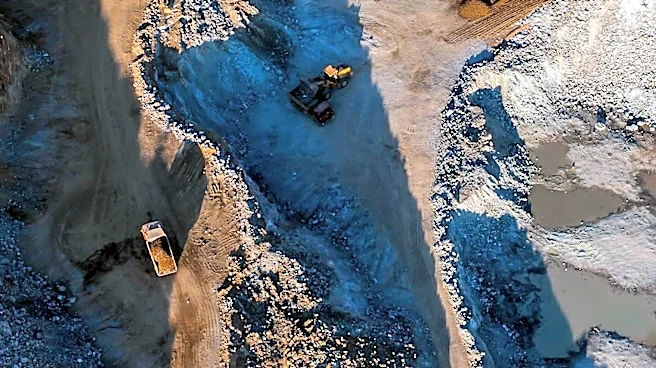
This initiative is highly significant for both the European Union and Argentina. For the EU, securing critical raw materials like lithium from diverse sources is crucial for its strategic autonomy and the success of its green transition, reducing reliance on concentrated supply chains. For Argentina, this represents a substantial opportunity to attract foreign investment, develop its mining sector, and transform geological resources into tangible economic growth. The involvement of the EIB and other multilateral organizations provides predictability and credibility to projects, which is vital for mobilizing capital in a country with a complex investment history. This collaboration can lead to job creation, infrastructure development, and the transfer of international standards in governance and sustainability, fostering long-term economic benefits for Argentina while securing essential resources for Europe.
What's Next?
The EU will continue its evaluation process for Argentine critical mineral projects, focusing on technical feasibility, governance, social aspects, and local added value. Selected projects will receive specific follow-up to facilitate their connection with the European Investment Bank and other European financial instruments. The signing of the €5 million technical cooperation program before the end of the year will further support the development of local capabilities and infrastructure. This ongoing engagement is expected to lead to concrete investment agreements and the implementation of projects that enhance Argentina's mining capacity and contribute to the EU's critical raw material supply. The collaboration will also involve continuous dialogue on regulatory frameworks and environmental standards to ensure sustainable development.
Beyond the Headlines
The EU's push to invest in Argentina's critical minerals sector highlights the intricate interplay between economic policy, environmental sustainability, and geopolitical strategy. This initiative is not merely about resource acquisition but also about establishing long-term partnerships that adhere to international standards for governance and social legitimacy. The involvement of institutions like the EIB and the World Bank underscores a commitment to responsible mining practices, which can set new benchmarks for the industry globally. However, it also raises questions about the potential environmental and social impacts of increased mining activity in Argentina and the need for robust regulatory oversight. This strategic move could reshape global supply chains for critical minerals, influencing trade relations and fostering a more diversified and resilient global economy.