



What's Happening?
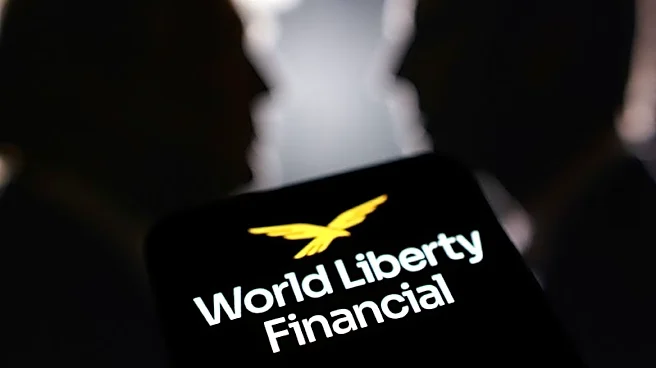
The Treasury Department has granted conditional approval to World Liberty Trust Company, a cryptocurrency firm co-founded by President Trump and his sons, to operate as a bank. This approval, issued on August 14, specifically authorizes World Liberty Financial
to issue stablecoins, a type of cryptocurrency pegged to the U.S. dollar. According to President Trump's financial disclosure, the company generated nearly $800 million for him in 2025. The Trump organization actively promotes World Liberty Financial on its website. Zach Witkoff, the CEO of World Liberty Financial, is the son of Steve Witkoff, a prominent foreign policy figure in the Trump administration. Treasury Secretary Scott Bessent, a Trump appointee, stated on August 17 that his department is focused on providing regulatory certainty for businesses to innovate and grow in America, aiming to solidify the U.S. dollar's role as the global reserve currency and establish the U.S. as a crypto capital. The preliminary charter includes safeguards, such as requiring the Trump family entity to remain separate from the trust company's operations and preventing it from influencing company management, to avoid conflicts of interest.
Why It's Important?
This decision marks a significant development for the cryptocurrency industry, particularly regarding the integration of digital assets into the traditional banking system. The ability for World Liberty Financial to issue stablecoins under a bank charter could enhance the legitimacy and stability of these digital currencies, potentially increasing their adoption and usage within the U.S. financial landscape. For President Trump, this approval could lead to further financial gains from his investment in the company. The move also reflects the Trump administration's broader policy of supporting the crypto industry, including implementing federal rules for stablecoins and reducing regulatory oversight from the Department of Justice and the Securities and Exchange Commission. This approach aims to foster innovation and growth in the crypto sector, aligning with the administration's goal of making the U.S. a leader in the global crypto market. However, the approval has drawn criticism, with Senator Elizabeth Warren calling it an act of 'self-dealing' and vowing to introduce legislation to counter what she perceives as 'unprecedented corruption.'
What's Next?
World Liberty Financial's preliminary charter requires the company to adhere to several conditions, including notifying the Office of Comptroller of Currency of any major business plan changes, maintaining at least $20 million in capital, and hiring an internal audit manager. The company's spokesperson, David Wachsman, emphasized that these safeguards are designed to prevent conflicts of interest and ensure the company operates under federal oversight. The long-term implications of this charter will depend on how World Liberty Financial navigates these regulatory requirements and how the broader political and regulatory landscape evolves. Christian Catalini, founder of the MIT Cryptoeconomics Lab, suggests that while being regulated as a bank is a serious undertaking, it could ultimately benefit society by bringing more structure to the crypto industry. However, he also noted that a future Democratic president could appoint regulators who might approach the company's oversight differently, potentially leading to changes in its operational environment. Senator Elizabeth Warren's announced intention to introduce legislation to address perceived conflicts of interest could also lead to future legislative debates and potential regulatory challenges for similar crypto-banking initiatives.
Beyond the Headlines
The chartering of World Liberty Financial as a bank raises deeper questions about the intersection of political influence, financial regulation, and the rapidly evolving cryptocurrency market. The approval, despite public comments alleging potential conflicts of interest due to President Trump's appointment of the comptroller, highlights the ongoing debate about ethical considerations when high-ranking officials have direct financial ties to regulated entities. While the Office of Comptroller of Currency stated that career staff, not the comptroller, supervise and enforce laws related to banks, the perception of self-dealing could erode public trust in regulatory processes. This event also underscores a broader trend of crypto companies seeking to operate within traditional financial frameworks, aiming for legitimacy and stability. The administration's push to make the U.S. the 'crypto capital of the world' suggests a strategic effort to maintain the U.S. dollar's global dominance by integrating it with digital currencies. However, this integration also brings challenges, including the need for robust regulatory frameworks that can adapt to new technologies while safeguarding against financial risks and ethical breaches.