
What's Happening?
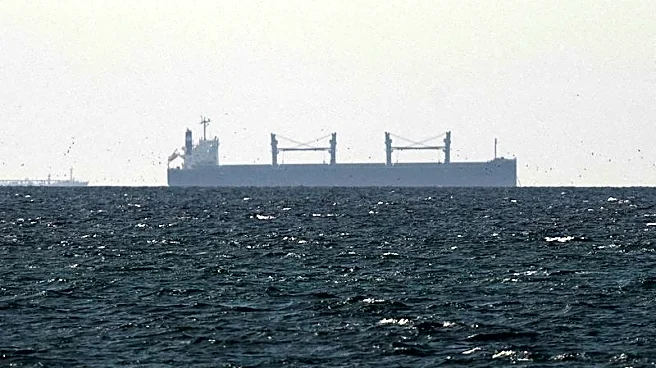
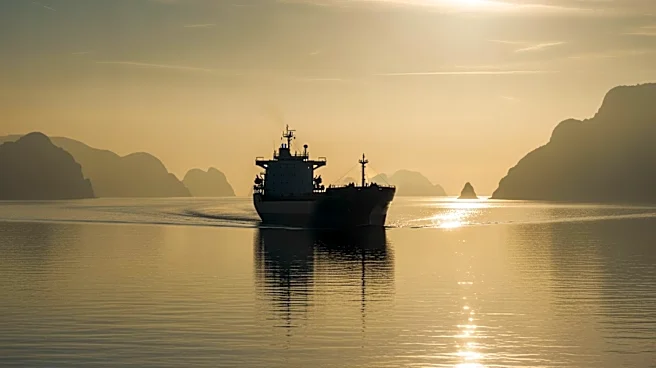
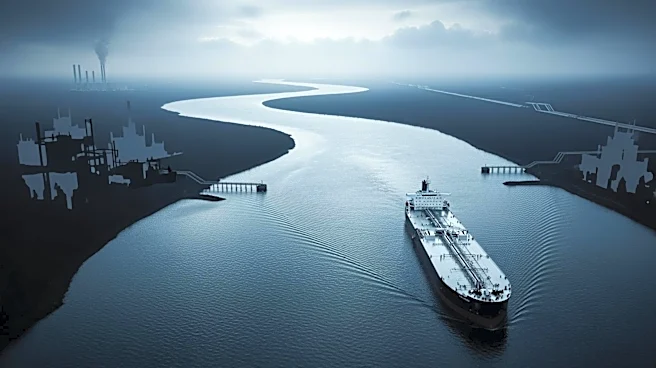
A U.S.-sanctioned supertanker, the Yuri, carrying Iranian oil, has halted its transit through the Strait of Hormuz amid a U.S. blockade. The tanker, loaded with 2 million barrels of crude from Kharg Island,
was tracked near Larak Island after ceasing to signal its location for several days. This development comes as the U.S. has intensified its blockade efforts, intercepting two Iranian oil tankers and redirecting 33 vessels since the blockade's inception. Iran has responded by attempting to assert control over the strait, including seizing commercial ships. The blockade has significantly reduced attempted transits through this critical oil channel.
Why It's Important?
The halt of the Yuri and the broader U.S. blockade have significant implications for global oil markets, as the Strait of Hormuz is a vital passage for a substantial portion of the world's oil supply. Disruptions in this region can lead to increased oil prices and volatility in global energy markets. The blockade also underscores escalating tensions between the U.S. and Iran, potentially affecting geopolitical stability in the Middle East. Stakeholders in the oil industry, including producers and consumers, may face challenges due to supply chain disruptions and increased transportation costs.
What's Next?
The ongoing blockade and Iran's actions in the Strait of Hormuz suggest continued tensions and potential further disruptions in oil transit. The U.S. may maintain or intensify its blockade efforts, while Iran could seek alternative routes or methods to export its oil. The situation may prompt international diplomatic efforts to de-escalate tensions and ensure the free flow of oil through the strait. Oil market participants will likely monitor developments closely, adjusting strategies to mitigate risks associated with supply disruptions.