







What's Happening?
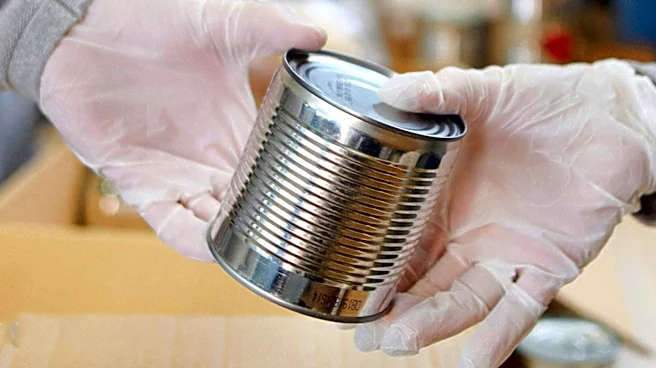
Kenosha County Public Health is offering $5 radon test kits throughout January, designated as Radon Action Month. This initiative allows individuals to purchase the discounted test kits by donating a nonperishable food item. The collected food items will
then be distributed to local food pantries, serving a dual purpose of promoting public health and supporting community welfare. This program aims to encourage residents to test their homes for radon, a naturally occurring radioactive gas that can pose significant health risks. The initiative is part of a broader effort by Kenosha County Public Health to address various public health concerns, as indicated by other local news items such as the annual Fall Wheel Ride and updates on the Kenosha County Job Center.
Why It's Important?
This initiative by Kenosha County Public Health is important because it addresses a critical, yet often overlooked, public health issue while simultaneously supporting food-insecure populations. Radon is a leading cause of lung cancer among non-smokers, and its presence in homes can only be detected through testing, as it is colorless and odorless. By offering discounted test kits, the county removes a financial barrier that might prevent residents from taking necessary precautions. The integration of food donations into the program creates a synergistic benefit, leveraging public health awareness to generate support for local food pantries. This approach not only improves community health outcomes by reducing radon exposure but also strengthens the social safety net by providing essential resources to those in need. It exemplifies a community-centric public health strategy that tackles multiple challenges with a single, accessible program.
What's Next?
As January progresses, Kenosha County Public Health will continue to promote the discounted radon test kit program, encouraging widespread participation. The success of the initiative will likely be measured by the number of test kits distributed and the volume of food donations collected. Following January, the county may analyze the data to assess the prevalence of radon in local homes and evaluate the program's effectiveness in raising awareness and mitigating risks. The collected food items will be distributed to local food pantries, providing immediate relief to families. Depending on the program's impact, Kenosha County Public Health might consider similar initiatives in the future or expand the scope of Radon Action Month activities. Continued public education on radon risks and mitigation strategies will remain crucial beyond January to ensure long-term community health.
Beyond the Headlines
Beyond the immediate benefits of radon testing and food donations, this program highlights the interconnectedness of public health, environmental safety, and social welfare. It underscores the idea that community well-being is multifaceted and requires integrated solutions. The initiative also serves as a model for how local government agencies can creatively engage residents in addressing complex issues by offering tangible incentives for participation. Ethically, it reflects a commitment to protecting vulnerable populations from environmental hazards while also addressing basic human needs. Culturally, such programs can foster a stronger sense of community responsibility and mutual aid, encouraging residents to look out for one another. The long-term implications could include a more informed and proactive citizenry regarding home safety and a more robust support system for those facing economic hardship, ultimately contributing to a healthier and more resilient Kenosha County.