







What's Happening?
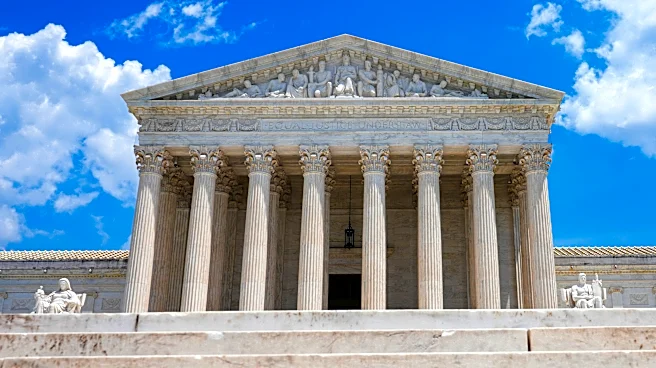
The Supreme Court has quietly dismissed President Trump's appeal in the E. Jean Carroll case. This decision effectively ends Trump's legal efforts to avoid a defamation lawsuit filed by Carroll, who accused him of sexual assault. The case has been ongoing
since Carroll, a former magazine columnist, alleged that Trump raped her in a department store dressing room in the mid-1990s. Trump has denied the allegations, calling them a fabrication, which led Carroll to sue him for defamation. The Supreme Court's decision not to hear the appeal means that the case will proceed in the lower courts, where Trump will have to defend himself against the defamation claims.
Why It's Important?
The Supreme Court's decision is significant as it underscores the judiciary's role in holding public figures accountable, even those who have held the highest office in the country. This development could have broader implications for how defamation cases involving public figures are handled in the future. For President Trump, this represents a legal setback, as he will now have to face the defamation lawsuit in court. The decision also highlights the ongoing legal challenges Trump faces post-presidency, which could impact his political and public life. For E. Jean Carroll, the ruling is a step forward in her pursuit of justice and could encourage other individuals with similar allegations to come forward.
What's Next?
With the Supreme Court's decision, the case will return to the lower courts, where proceedings will continue. President Trump will likely have to provide testimony and evidence to defend against the defamation claims. The outcome of this case could influence public opinion and potentially affect Trump's political aspirations, especially if he decides to run for office again. Legal experts and political analysts will be closely watching the developments, as the case could set precedents for how similar cases are handled in the future.