







What's Happening?
A museum in the Netherlands has created a unique tribute to the late Dutch conceptual artist Wim T. Schippers by spreading over 800 pounds of peanut butter on its floor. Schippers, who passed away on June 10 at the age of 83, was known for his unconventional
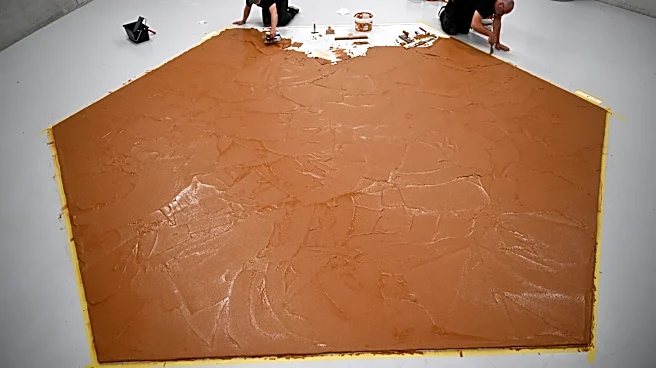
art, including the original 'Pindakaasvloer' or peanut butter floor, first created in 1969. The installation was unveiled at the Depot offshoot of Museum Boijmans Van Beuningen in Rotterdam. The exhibit required meticulous application of 40 buckets of peanut butter to form a 270-square-foot hexagon, with the peanut butter spread to a thickness of 0.8 inches. The museum has issued a warning for visitors with peanut allergies. The installation will be on display until September 6.
Why It's Important?
This installation highlights the enduring impact of Schippers' work and the broader conversation about what constitutes art. By using everyday materials in unexpected ways, Schippers challenged traditional art norms and invited viewers to reconsider their perceptions of art. The exhibit also underscores the role of museums in preserving and celebrating avant-garde art, which can provoke thought and discussion. For the museum, this installation not only honors Schippers' legacy but also attracts visitors, potentially boosting attendance and engagement with contemporary art.
What's Next?
The peanut butter floor will remain on display until September 6, offering visitors a limited time to experience this homage to Schippers. The museum may continue to explore similar unconventional exhibits to engage audiences and honor other artists who have pushed the boundaries of traditional art forms. Additionally, the museum's approach to handling potential allergens in art installations could set a precedent for future exhibits involving unconventional materials.
Beyond the Headlines
The installation raises questions about the intersection of art and public safety, particularly concerning allergens. It also reflects on the cultural significance of using food in art, which can evoke nostalgia and personal memories. This exhibit may inspire other artists to explore the use of everyday materials in their work, further blurring the lines between art and life.